Getting the mail can feel like the best part of the walk to the curb when your mailbox has a little personality. That overlooked patch of dirt around the post can become the prettiest spot on the street with a few plants, some stone, or a bit of edging.
Mailbox landscaping has moved far beyond simply placing a post in the grass, with layered flowers, ornamental grasses, mulch beds, and even small lantern touches that glow at dusk. It’s a small project with a big payoff, so grab a coffee and scroll through these 20 ideas before reaching for a shovel this weekend.
Tall Square Post with Small Lantern and Shade Garden
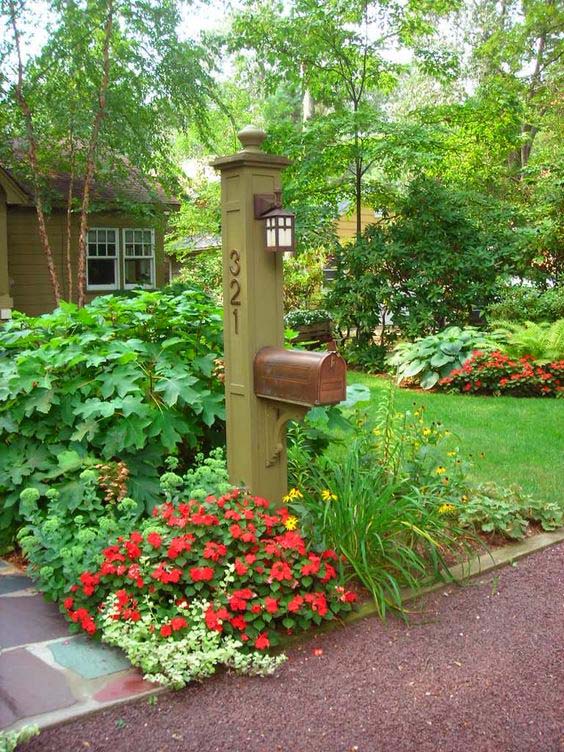
On the tall square post, a small lantern provides night lighting after dark and creates a welcoming entryway. The shade garden wraps around the post base, showing how lush a mailbox garden can appear in shade. Hosta and red impatiens fill the garden.
For a shady location, use hostas as easy shade plants and add impatiens for color. Impatiens thrive in shade.
Beside the gravel drive, a stone path edge borders the garden bed and helps keep it neat.
Garden Galvanized Tub Horseshoe Trim
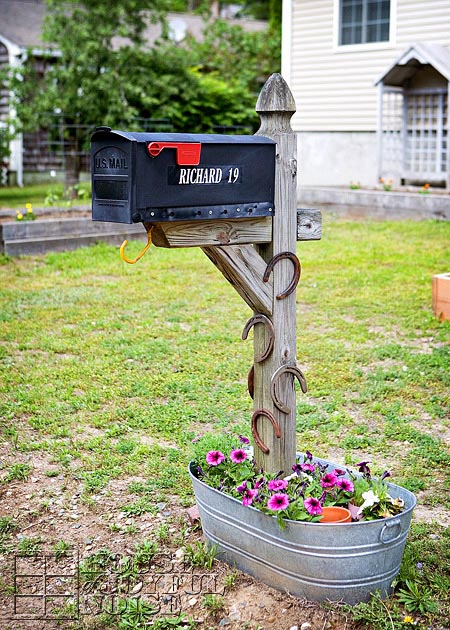
This rustic ranch-style post has horseshoes nailed onto it.
A metal galvanized tub holds purple and pink petunias. Unlike a dug bed, tub planting can be moved when needed.
Along the metal edge, cascading annuals can spill over the sides. A galvanized tub works well for renters or for any nonpermanent planting.
A personal design detail can communicate the personalities of the residents.
Bronze Mailbox Post and Foliage Bed
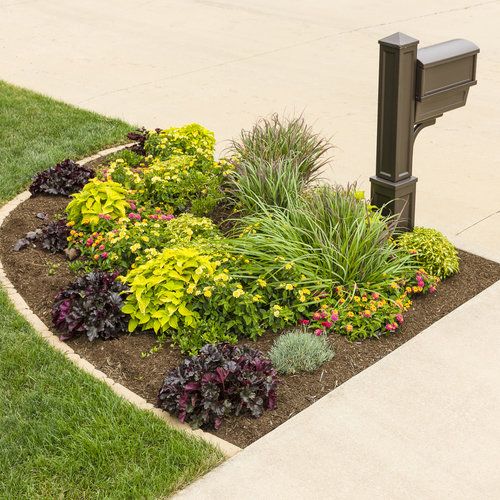
The foliage provides color without blooms, using chartreuse coleus, deep purple heuchera, and ornamental grass in the planting bed. Together, these plants add color without relying on flowers. The planting bed gets strong contrast from chartreuse foliage beside near-black foliage, and it retains that appearance from spring through fall.
Around the mailbox, foliage plants suit anyone looking for lower-maintenance color. They do not require deadheading, and many foliage plants retain their color for months. A curved mulch border runs around the planting bed and against the bronze mailbox post.
White Post Bed with Pansies and Petunias

Around the white post, pansies and petunias are planted close together. Both flowers use pink, purple, orange, and white blooms. The flower bed follows an irregular pattern, with dense layers of color throughout.
Bare soil disappears quickly when pansies and petunias are planted close together, creating rapid fill-in. Both are easy-care annuals that bloom for months, and the spacing can be closer than the plant tag recommends.
A stone border runs against the driveway and around the flower bed, helping keep the bed tidy.
Black Wall-Mounted Mailbox and Potted Greenery
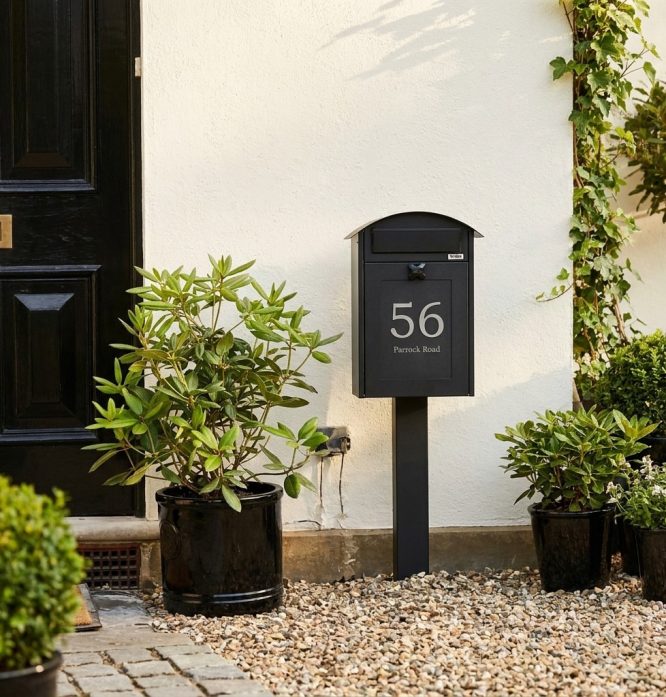
A black mailbox mounted on the wall beside the front door can display the home’s number and street details. This setup suits a property with limited space.
Potted shrubs sit on both sides, so no digging is required. They suit small entryways and limited front yards. Pots that match the mailbox finish hold evergreen shrubs, which provide greenery throughout the year.
Underneath is gravel. It supports a low-maintenance setup while keeping the area neat.
Bronze Boy Reading Mailbox Statue
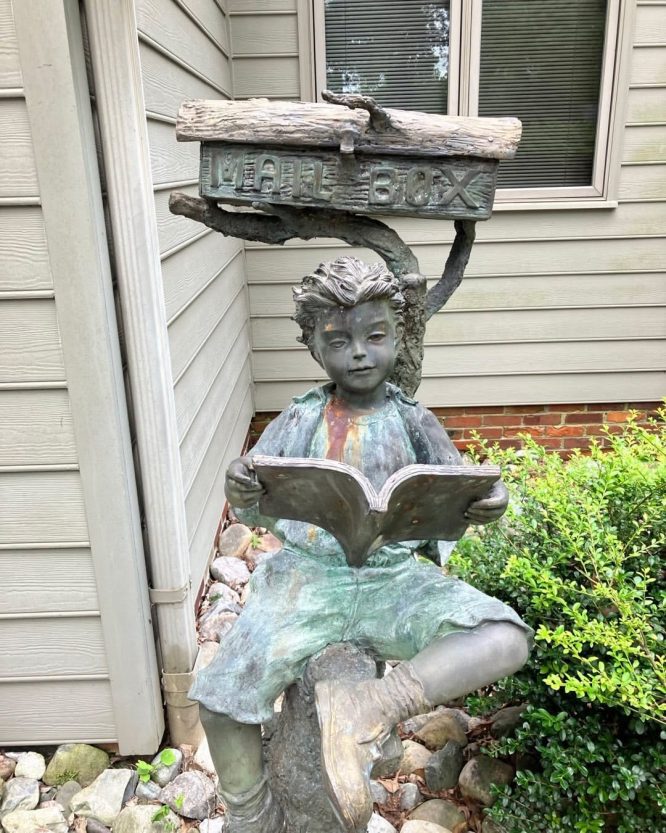
Above the statue’s head, a small wooden sign reads “mail box.” The statue holds the sign while standing against the house. This yard art serves as a mailbox and may prompt conversation among passersby.
River rock covers the ground around the statue base, with low shrubs planted around it as well. Place the statue mailbox near the front door rather than at the curb, and use the base plantings to help prevent siding loss.
Retro Yellow and White Mailbox with Bougainvillea

Large, bold house numbers are printed on the side of the mailbox. The boxy mailbox uses yellow and white in a retro design. Bright pink bougainvillea spills below the mailbox and softens its clean lines, contrasting the mailbox’s structured design with natural growth.
A strongly shaped mailbox suits a softening plant such as bougainvillea, while additional hard edges can be avoided. Bougainvillea grows fast, flowers heavily, and needs little care.
Give the bougainvillea support and allow it to grow naturally.
Small Shingled Cottage Mailbox
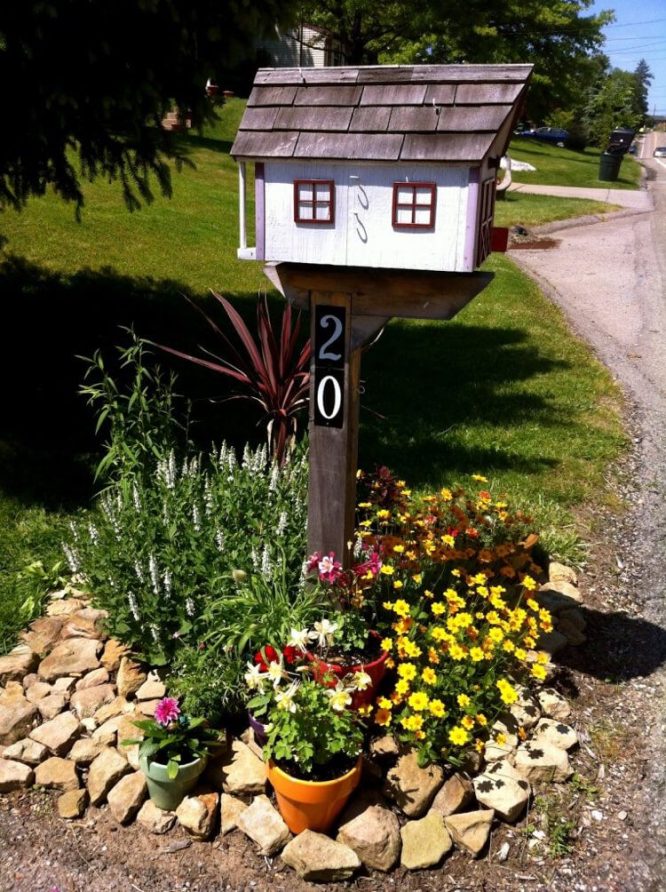
A shingled roof gives this post-mounted mailbox a dollhouse form. It adds personality to the entryway.
A house number is attached to the post below the roofline. Inside the rock-edged bed, potted flowers bring together red, yellow, and pink.
Potted flowers can add temporary color without requiring a permanent bed. Keep the mailbox plantings simple, then use the pots when you want a change.
Seasonal flower pots can be swapped out to maintain year-round freshness.
Round Red Orange and Yellow Mum Bed with Rustic Stone Circle
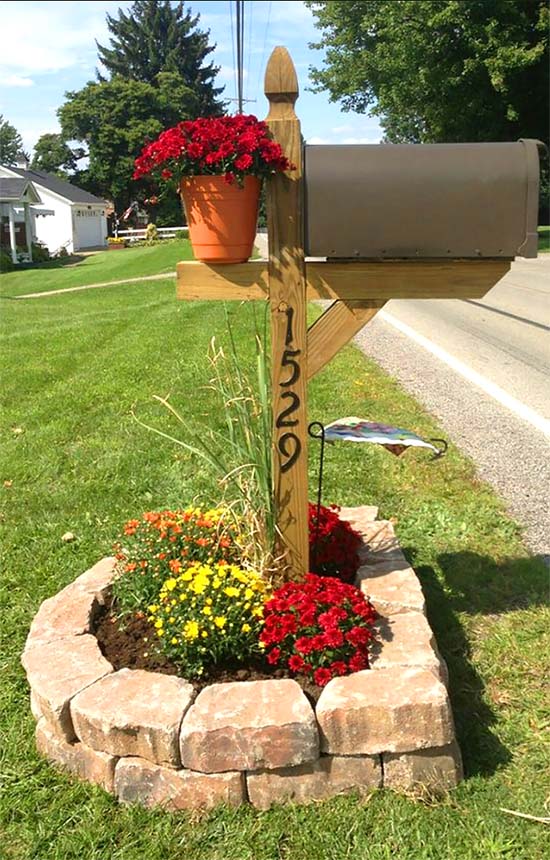
The round mum bed fills a rustic stone circle. Planting the mums close together creates a full, bushy look.
A red mum sits in a terracotta pot on the post shelf. This placement adds height and makes the display appear larger.
Around the post, stagger the mum colors instead of arranging them in solid blocks. The varied spacing creates a lived-in look and avoids an overplanned appearance.
Around the lawn, the stacked stone ring contains the mulch and soil in the bed. It also prevents runoff into the lawn.
Green Mailbox Lupine Planting
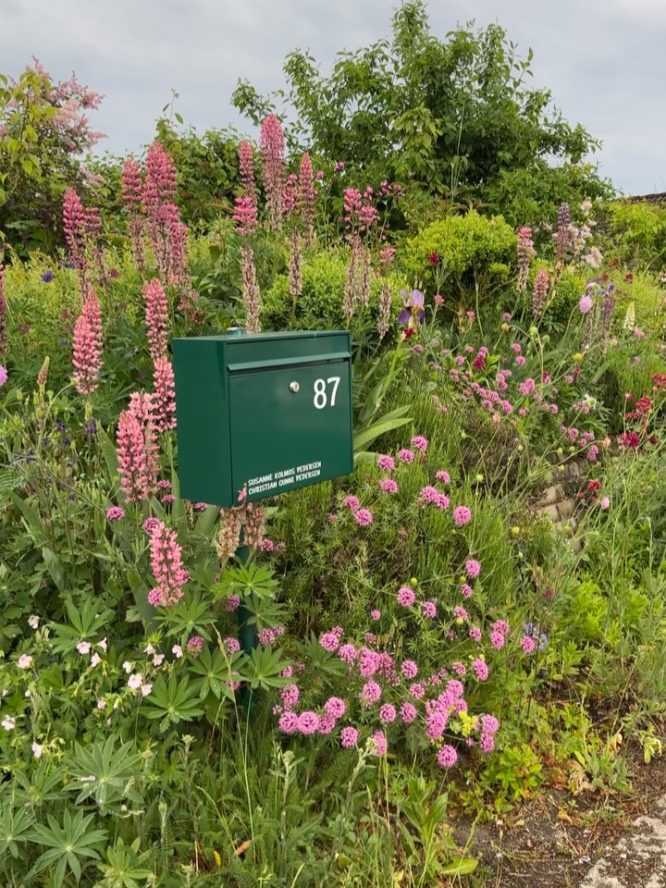
Around the green mailbox, pink lupines rise in tall spikes and frame the box. Smaller pink blooms fill in among the lupines. The planting has an unmanicured growth pattern that matches an English garden style.
Lupines planted in clusters create layered fullness, and they do best in cooler climates with well-drained soil, so check whether they suit your local conditions. Let the lupine planting grow wild, with limited trimming.
Deep Purple Clematis Mailbox Planting
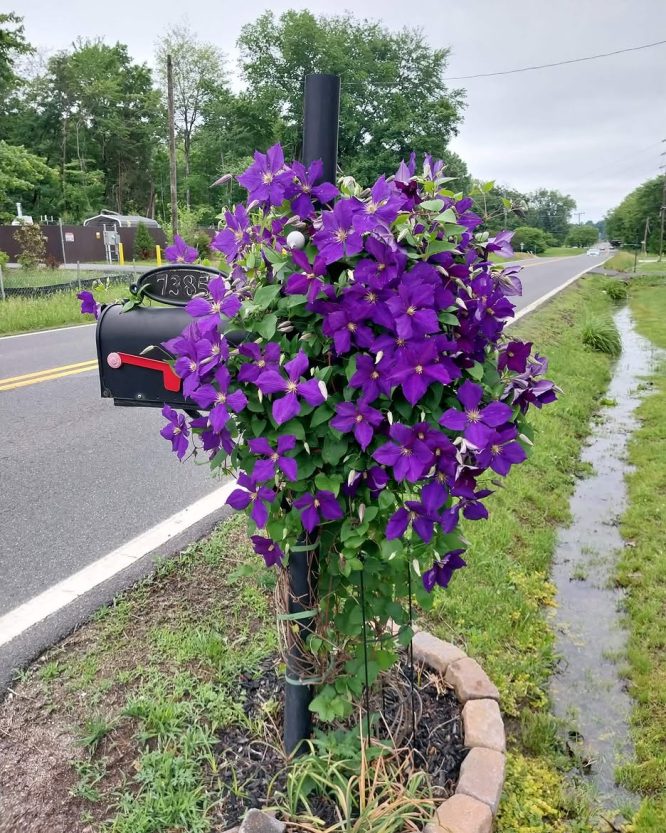
A black mailbox support takes the form of a single pole, with a large cluster of deep purple clematis growing around it. The dark hardware makes the flowers more prominent.
The clematis grows in a roadside flower bed beside a ditch. Brick along the edge keeps the bed tidy.
For a dramatic clematis display, choose a large-flowering variety and allow it several seasons to fill out. Prune the clematis hard every year to reduce legginess and support heavy blooming. Against a dark post or pole, bright blooms look more vivid.
Wood Post with Orange Daylily and River Rock

A wood post has a homemade, warm feel, especially with orange daylilies growing beside it. The tall daylily growth adds both height and movement.
River rock covers the base of the post and supports a low-maintenance planting. It avoids annual mulch replacement and helps reduce weeds.
The daylily and river rock combination has low upkeep. Daylilies return annually, so they require only one planting.
Mix river rock sizes to add texture around the post. Avoid using uniform gravel for the rock selection.
Dark Wood Post with Round Brick Flower Bed
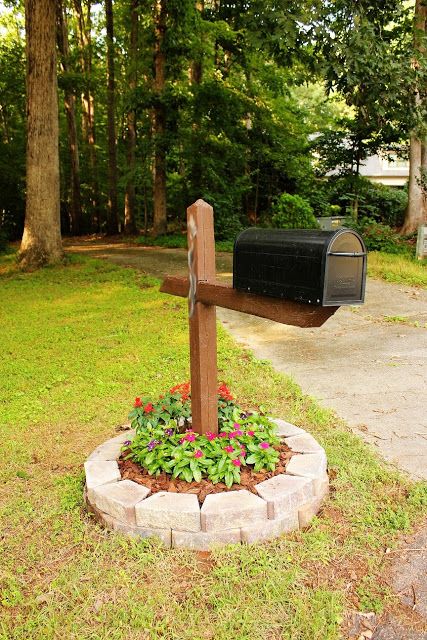
A round brick flower bed surrounds the dark wood post. The mailbox is held high on the post, while the bed keeps the design simple.
Dark mulch fills the flower bed around the pink impatiens. The bed requires low maintenance.
As a beginner project, mailbox landscaping can stay manageable with one type of flower and one mulch color. Use brick for the bed edging.
Even simple mailbox landscaping can produce a large visual effect.
Granite Post Mailbox Planting
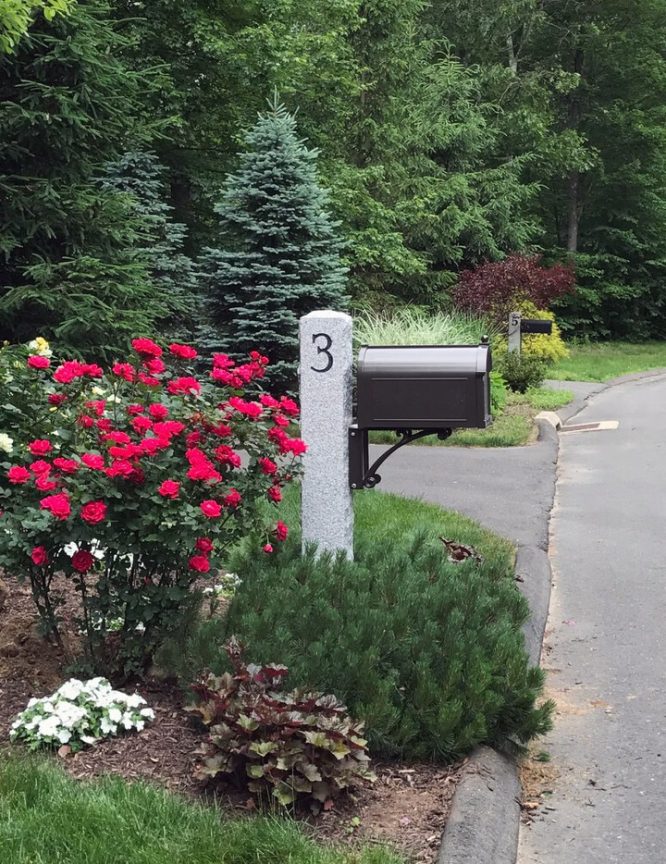
A solid granite post provides permanence, with the house number carved directly into the stone. The integrated number removes the need for a separate sign.
Low evergreen foliage from a dwarf pine sits beside the granite post, along with a full red rose bush. White impatiens are planted at the post base.
Roses provide summer color, while evergreens offer year-round greenery. Dwarf pines remain compact, so they do not overwhelm the mailbox. Roses and evergreens form a classic combination for mailbox planting.
Classic White Post with Purple Clematis
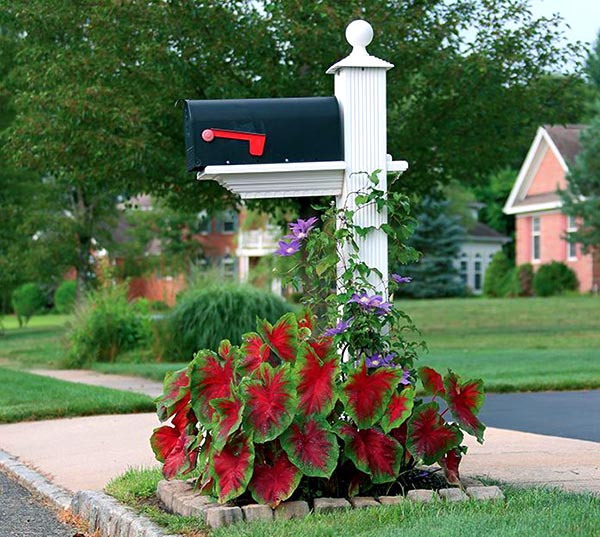
Clematis softens the post’s straight lines. The purple vine climbs the white post and winds around it, bringing a looser shape to the classic structure.
Bright red caladiums fill the base of the white post, where they contrast with the purple clematis. That color contrast draws attention to the garden bed.
Under a tree, the mailbox sits in a shaded spot that suits this plant combination. Plant the clematis at the post base and give it trellis wire for support. Caladiums prefer shade as well.
Add small brick edging around the garden bed to define its edge.
Modern Stone Mailbox Wall
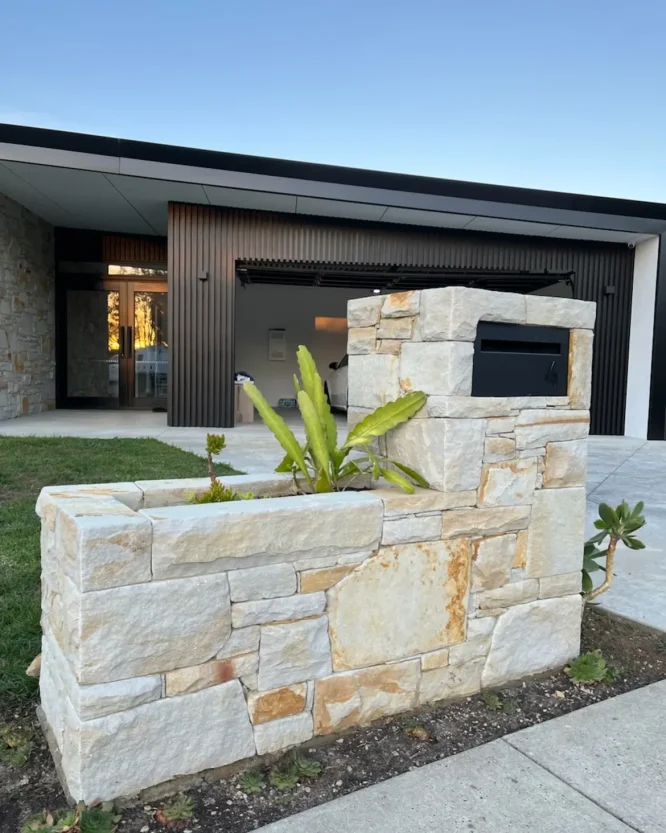
This stone mailbox wall replaces a traditional post and is integrated into the landscape. At the top edge of the wall, a built-in planter holds succulents and other drought-tolerant plants. The low-water planting matches the house landscape and is attached to the mailbox wall.
Structural succulents need little water and little trimming, making them a useful pairing for the stone cladding. Natural stone cladding is worth the investment for a contemporary mailbox design.
The stone mailbox wall functions as part of the home’s architecture.
Wildflower Meadow Mailbox Planting
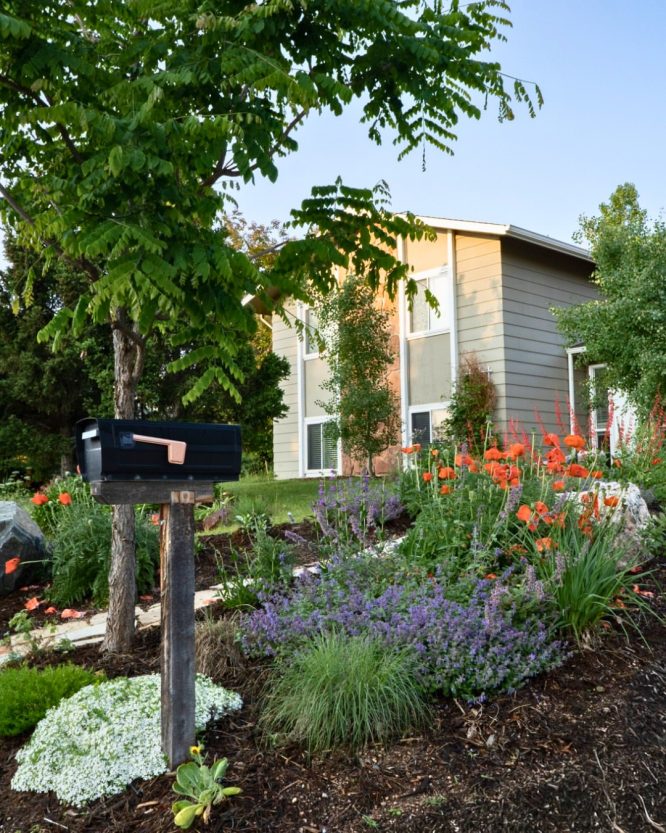
Loose orange poppies and purple catmint grow around the mailbox, giving the planting a meadow-style look. The mailbox settles naturally into the landscape, with greenery helping it feel integrated with the surrounding planting.
Catmint is a perennial, while poppies are self-seeding annuals. Mix the two in one planting, and it can fill in each year with limited help.
Use a simple wood post for the mailbox support when the planting around it is meant to be the prominent feature.
Pink Pedestal Mailbox Planting
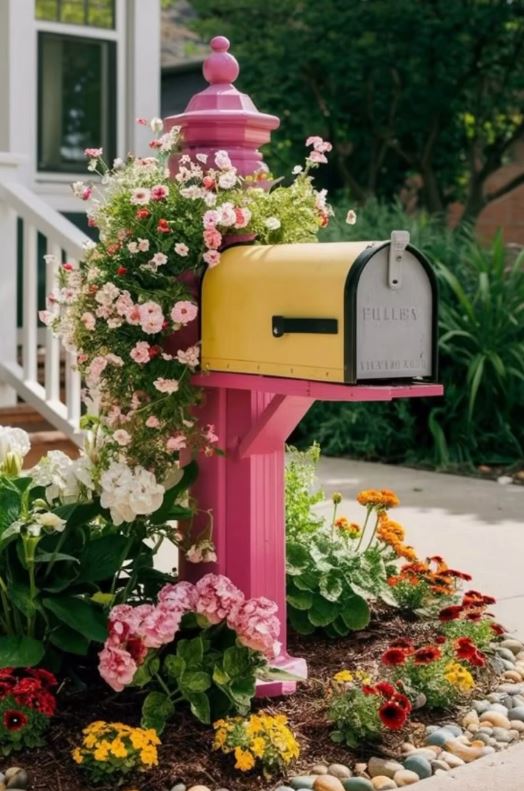
The pink-and-yellow combination increases the mailbox’s visibility from the street. A bright pink pedestal post supports the yellow mailbox.
There are red and yellow flowers around the base, with pebbles forming a border at the post base. Pink and white blooms cascade along a single side of the post, and the pebble border maintains a clean appearance.
For a connected look, match the post color to the house trim or door. Plant trailing flowers such as petunias on the post so their growth cascades downward. The mailbox serves as a focal point.
Red and Yellow Tulip Ring with Stacked Stone Border
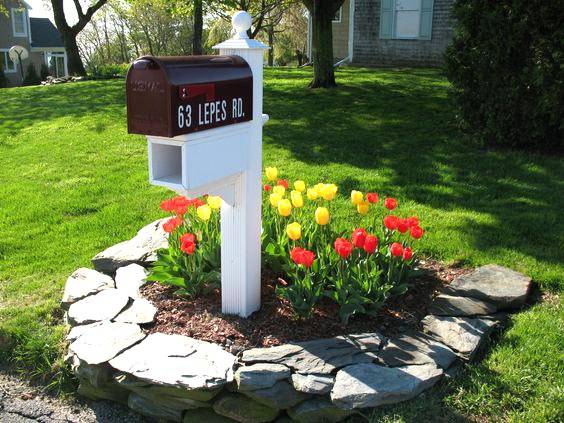
The tulip ring sits inside a stacked stone border and surrounds the mailbox. Red blooms and yellow blooms fill the ring. Flat stones form the stacked border around the tulips, using natural layering to create a rustic style.
In fall, plant the tulip bulbs for spring blooming. Alternate the tulip colors rather than planting them in grouped blocks.
Reddish mulch covers the soil around the planting. It contrasts with the yellow tulips and increases their visibility.
White Mailbox with Cascading Purple Clematis
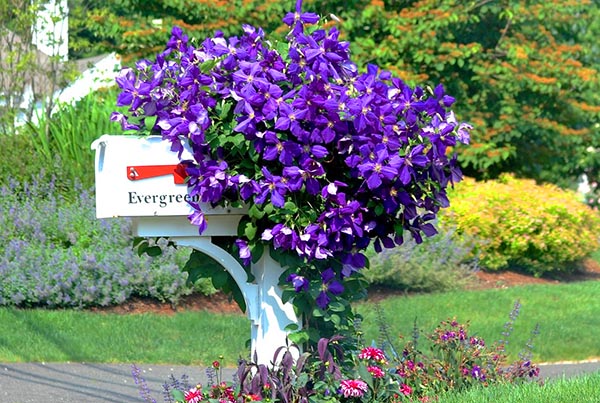
Purple clematis covers the white mailbox with its blooms and leaves. The clematis drapes over the top of the mailbox, creating a soft, wild shape instead of a rigid outline.
At the mailbox arm, train the clematis stems along the top edge during early growth. This discourages straight growth and encourages the stems to overflow instead.
Plant purple lavender and purple catmint near the clematis to extend the purple color around the mailbox. Both plants can sit close to the clematis.