
A culvert may seem like a forgettable part of the yard, but thoughtful landscaping can turn it into a charming outdoor feature. Whether it runs beneath the driveway, borders the yard, or sits where visitors see it first, simple details can help it feel like a natural part of the space. From stacked stone and soft greenery to small bridge details and wildflowers spilling over the edges, these 19 culvert landscaping ideas offer plenty of inspiration for giving that awkward spot a more intentional look.
Stepping Stones in a Garden Valley
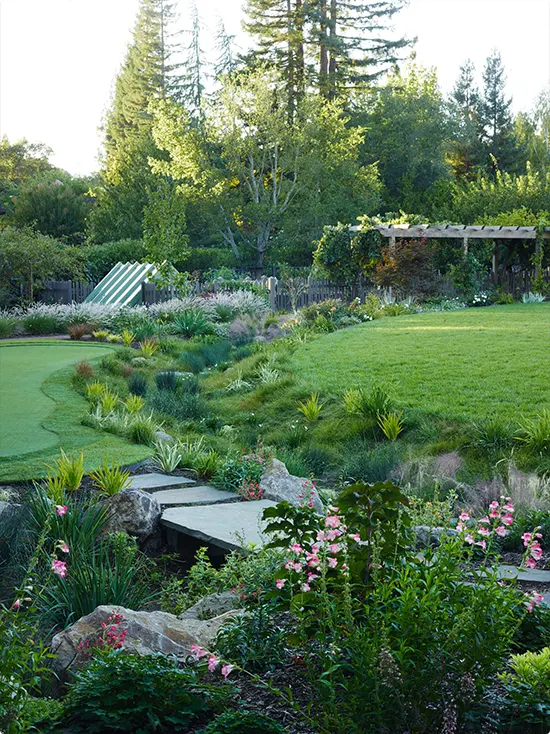
Between the garden beds, a pathway crosses the culvert with flat stone pavers placed in a line from one end to the other. The pavers form the crossing and bridge the culvert.
Dense beds filled with sprawling shrubs, pink flowers, and ornamental grasses line the garden path, which resembles a countryside estate. Extensive greenery covers much of the area, leaving the culvert drainage mostly hidden. The garden planting is more noticeable than the culvert drainage.
Hidden Culvert and Curved Slate Dry-Stack Wall
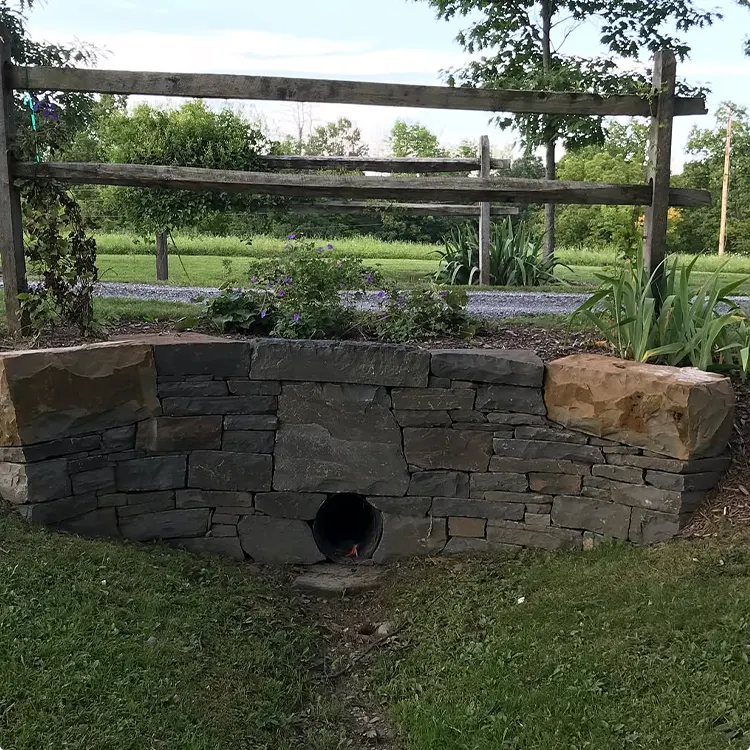
A curved slate retaining wall is formed from dark, dry-stacked slate stones, with a small culvert opening at the wall base. Behind the wall, purple flowers grow in a garden bed, while large anchor stones mark the wall ends. A weathered wood split-rail fence sits in the background.
The handmade wall is built from fitted stones in a dry stack with no mortar, integrating the culvert into the wall. The culvert appears as a landscape element.
Fieldstone Stream Arch
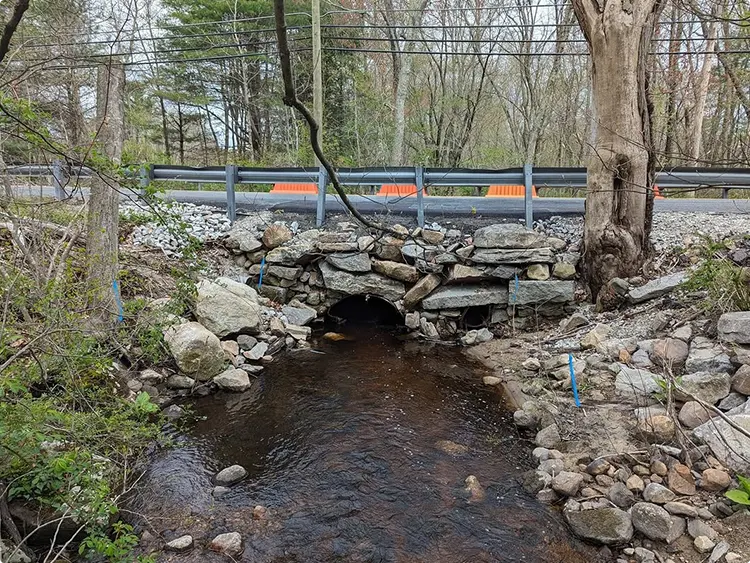
At the center of the feature, a culvert pipe passes through a hand-built fieldstone arch. The rough opening spans a small stream and gives the crossing a simple, sturdy form.
A few bare trees and early spring plants frame the arch, while smooth, water-worn rocks line the small stream below. The fieldstone structure has a rough, organic character and resembles an old estate feature.
The fieldstone varies in color and size, which the source says supports its handcrafted appearance. For historic landscape character, a fieldstone arch can be worth the effort.
Blue Gray Stone Culvert Apron
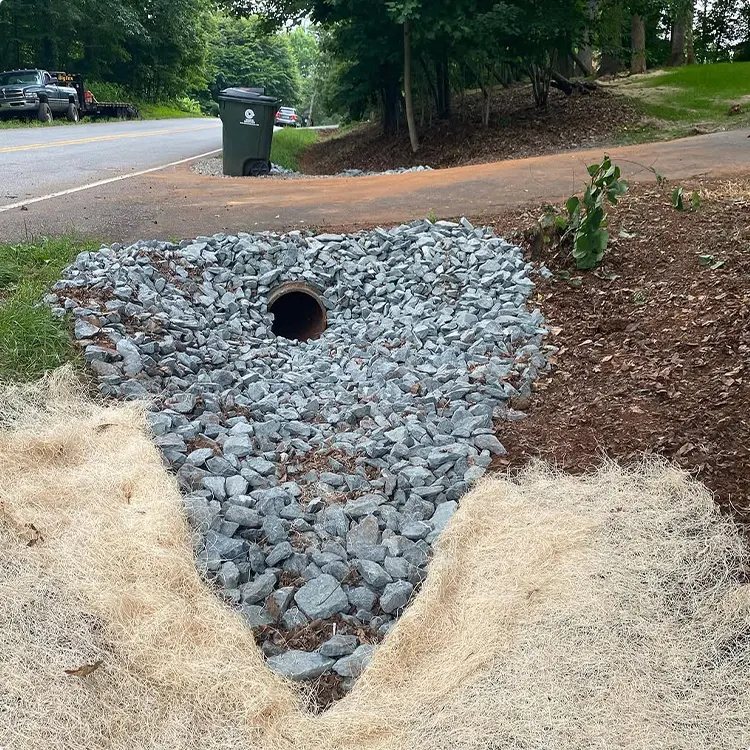
The blue-gray crushed stone apron forms a triangle around the culvert pipe at its position. It is packed tight and angled so water flows directly. Straw erosion netting covers the disturbed soil, and grass is growing back through the wooded, casual setting.
Blue stone provides a finished appearance, according to the source claim. Use erosion control for a new culvert installation because the erosion control supports site establishment.
River Rock and Grass Border
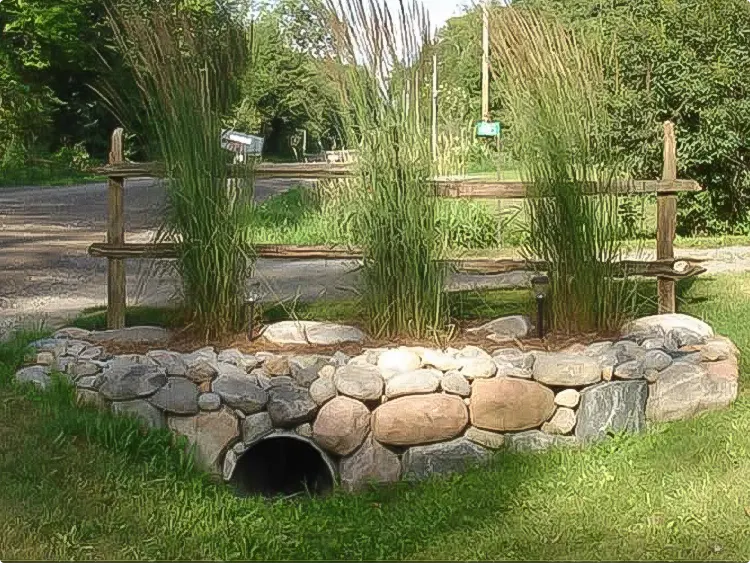
A low, curved border of rounded river rock surrounds the culvert opening. Inside the border, a planting bed holds tall ornamental grass.
A rustic wood post fence follows the spot at the edge of the gravel road. The fence is made from wood posts and has a rustic style.
The river rocks and grasses create a natural wetland feel, while the landscape appears low-effort. It still requires planning.
Stone Capped Arborvitae Culvert
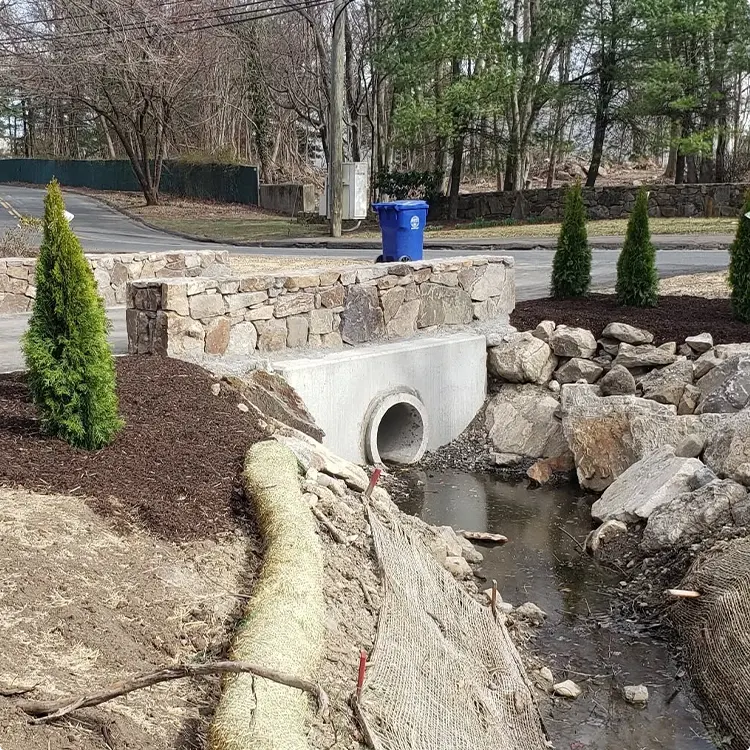
The concrete culvert runs under the driveway entrance, while a low stacked-stone wall is built across it. This fresh installation gives the entrance a finished structure.
Fresh, dark mulch surrounds two tall arborvitae planted beside the concrete culvert. Rocks are scattered around the water outlet, where they manage erosion.
Arborvitae growth is part of the plan, so allow a couple of years for it to develop. The clean and structured design converts the drainage spot into an entrance feature.
Large Corrugated Metal Culvert with Fieldstone Arch Wall
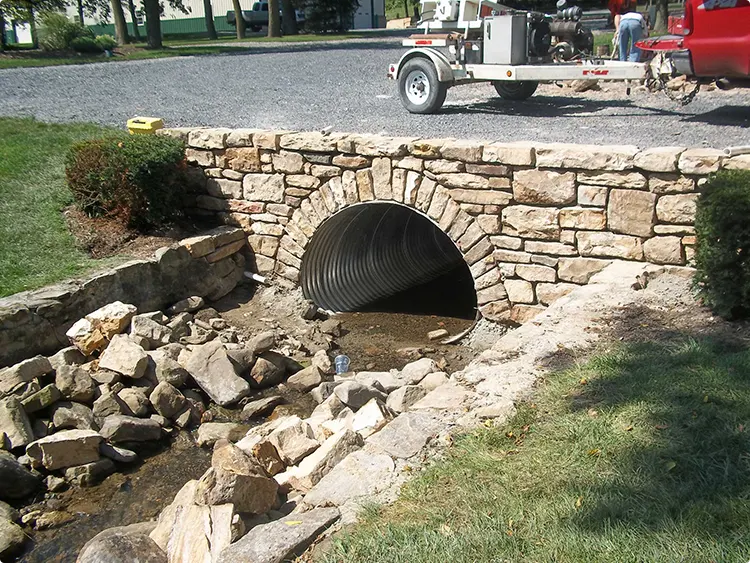
At the culvert, a fieldstone arch wall frames a large pipe made from corrugated metal. Together, the built stonework and metal structure resemble farmstead style.
Water is exiting among scattered rocks at the culvert base. Above the pipe, even fieldstones are tightly stacked to form an arch.
The stone-faced culvert appears long-established, with a rustic, old-world character that suits rustic properties. It is recommended for an old-world aesthetic.
Bridge Made from a Wide Limestone Slab
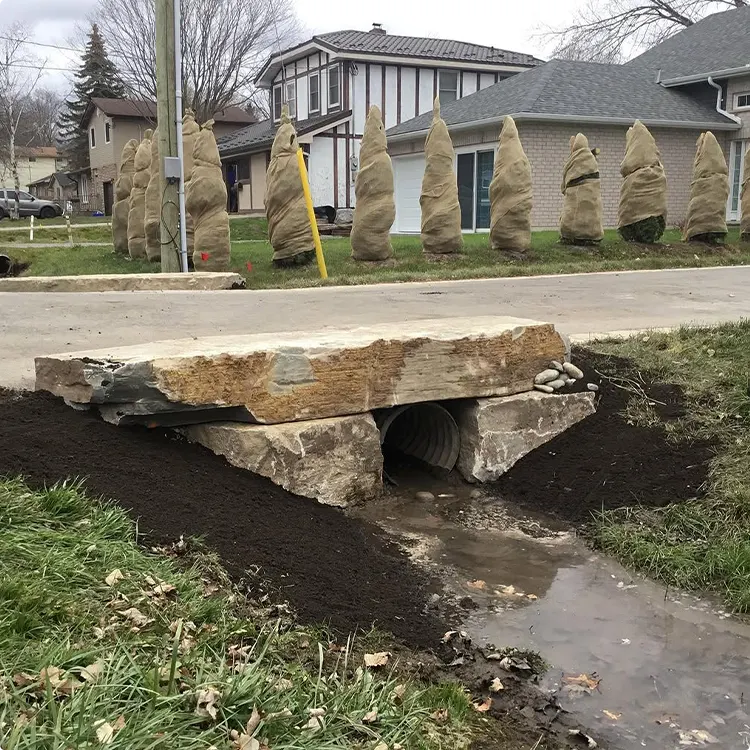
Across the culvert, two massive limestone slabs with flat surfaces and natural edges rest side by side. They form a crossing that is both wide and solid.
The raw limestone slabs have natural edges and no shaping. They function as a culvert crossing.
The limestone slab crossing has a sturdy, unpretentious, no-fuss style. It is recommended for rural and semi-rural properties.
Farm Crossing With Three Culverts
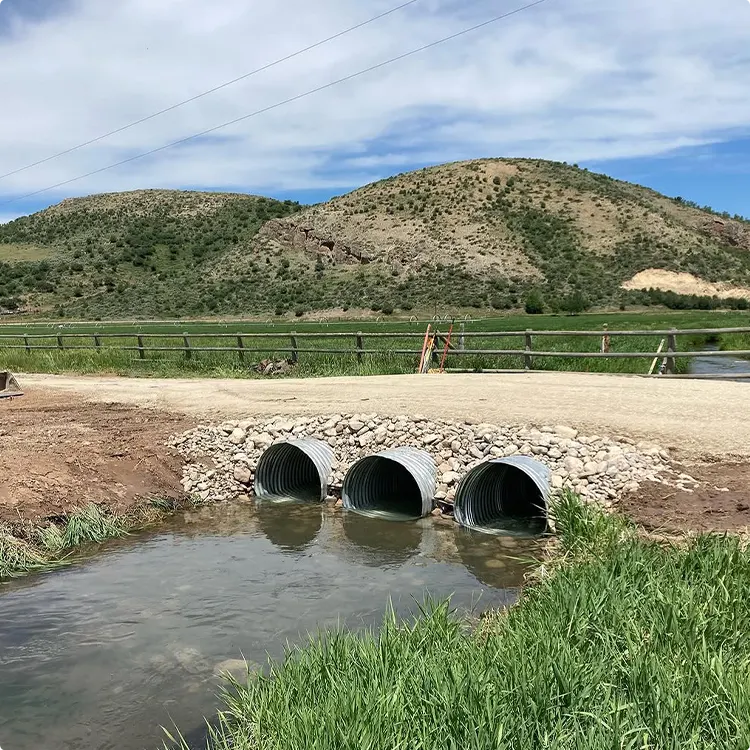
Rounded rocks provide stability around three corrugated metal pipes set side by side beneath the gravel farm road. The rocks are packed around the pipes.
The Triple Culvert Farm Crossing has the character of open working land, according to the source claim. Free-flowing water passes below the gravel road, with a mountain backdrop in the distance.
For serious water flow, a multi-culvert setup is a practical choice for water management. The three matching pipes create clean repetition, and the source describes the arrangement as visually balanced.
Arched Culvert Bridge
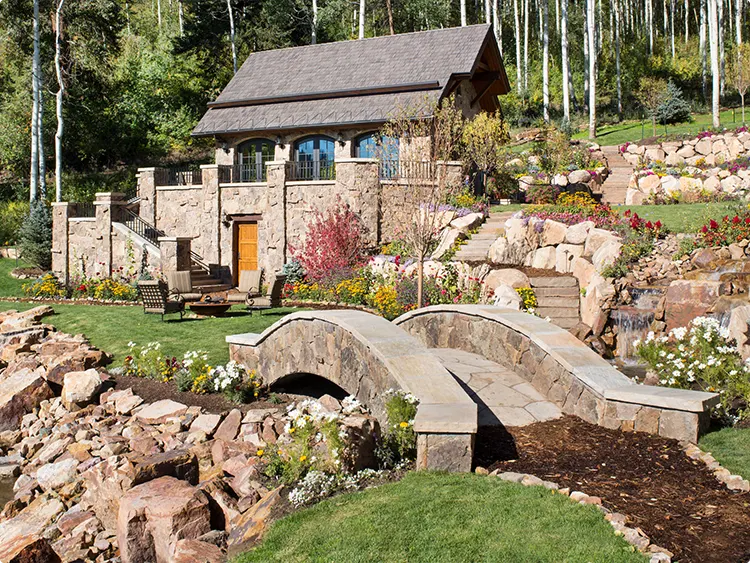
Colorful flowering plants cascade down the terraced hillside behind the mountain cabin. The stone arch bridge is in front of the cabin, giving the hillside setting a clear layered arrangement.
A bridge made from flat stone slabs is set on a stone pillar and arches over the culvert. Its stone wall and stone step match the bridge.
At the stream or drainage channel, a small stone bridge gives the culvert a more noticeable role. It changes the culvert into a focal point and avoids an eyesore appearance.
Small Arched Bridge to the Pond at Twilight
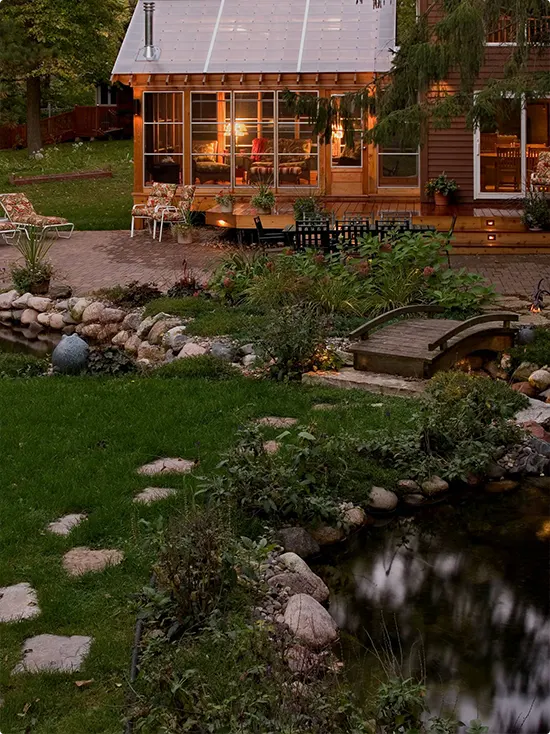
Rounded river rocks line the pond edge in this dusk backyard. A culvert leads into the pond, and a small arched wooden bridge crosses it.
A warm glow comes from the greenhouse-style sunroom in the background, contributing to a dreamy atmosphere. Lush planting surrounds the bridge, with tall grasses, large-leaf plants, and garden beds with high texture.
The garden design connects with a simple wooden bridge. It integrates the culvert into the garden as a natural landscape element.
Woodland Twin Pipe Waterfall
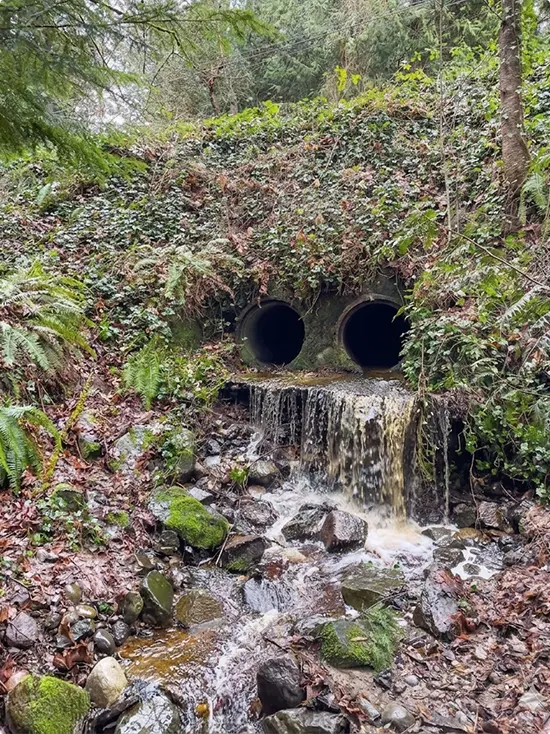
Mossy rock gives the cascading water a natural-looking waterfall effect as it settles onto the surface. The feature sits among two concrete culvert pipes tucked into a heavily planted hillside.
Ivy and ferns spread across the pipes and slope, softening the structure with dense greenery. A tall evergreen shades the water feature, while the plants drape over the hillside around it.
This water feature is described as a discovery rather than a design. Encourage ivy or native ferns to grow around the wooded culvert with flowing water, as they can create a natural-looking effect.
White and Gray Crushed Stone Driveway Culvert Pad
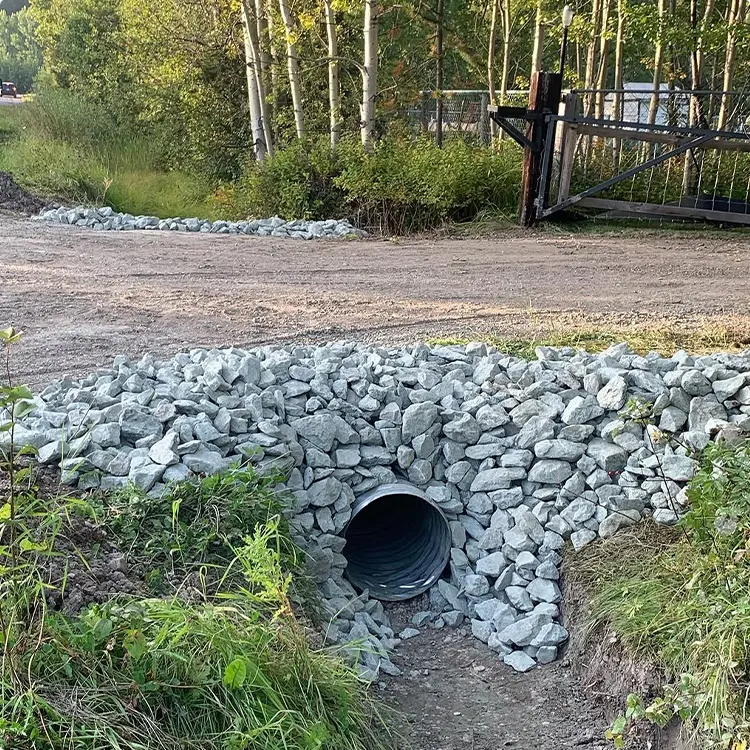
At the driveway entrance, white and gray crushed stone is packed around the corrugated culvert pipe. The crushed stone extends along the rock channel behind the culvert. A wood-and-wire gate near the entrance frames the gravel driveway, with birch trees in the background.
White stone contrasts with the grass and dirt, giving the culvert pad a neat, intentional appearance. It is recommended for rural driveways because it offers low upkeep, low maintenance, and quick installation.
Boulder Wall Children’s Tunnel
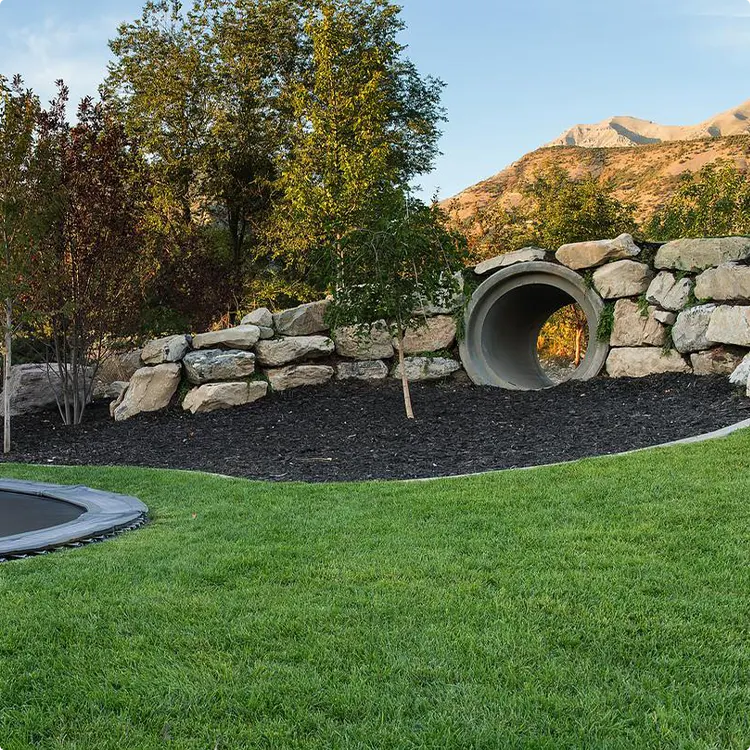
A tunnel for play is created by a large round concrete culvert pipe. It is set into the stacked boulder wall.
Near the lawn, a trampoline is mounted flush with the ground. Young trees are planted on either side of a planting bed filled with dark mulch, and the setup is designed for children.
The culvert serves both drainage management and backyard play, so it combines drainage and play in one feature. Children enjoy crawling through spaces like this.
Boulder and Gravel Culvert Edge
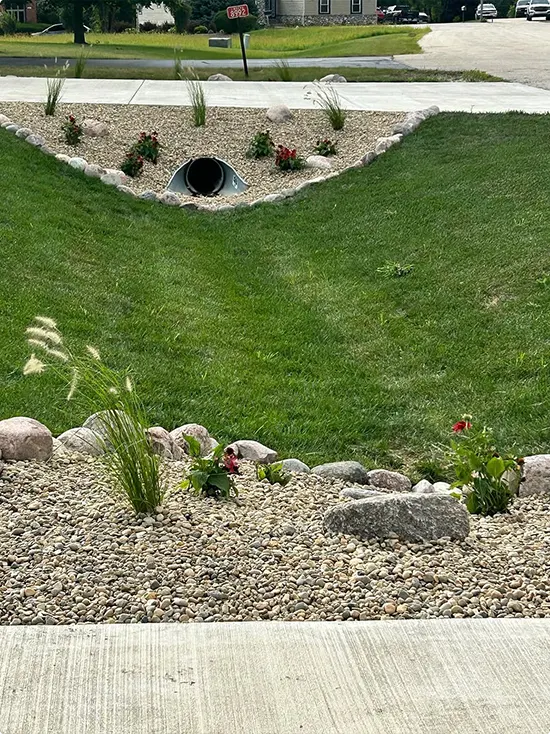
A gravel-filled swale holds the concrete culvert pipe at its center. Low ornamental grass and a rounded boulder surround the pipe.
Red flowering plants are scattered across the swale, which curves toward lawn level on both sides. The gravel, boulders, and plants make this drainage area resemble a garden feature rather than a utility zone. For a front-yard drainage area, use this approach when year-round appearance is needed.
Moss-Topped Culvert in a Wooded Area
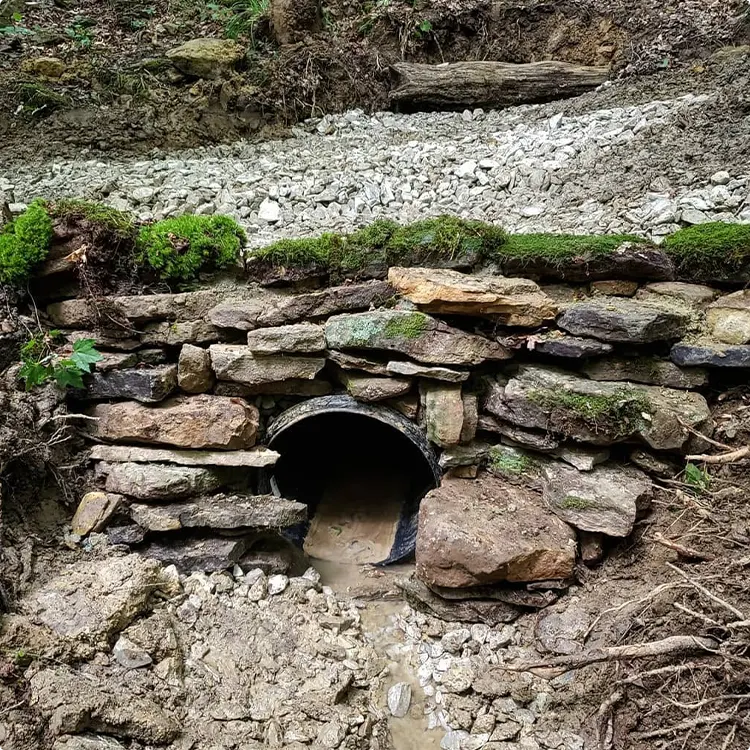
Thick moss covers the top edge of the deep culvert opening on a wooded hillside. Rough-cut stones surround the opening in a stacked arrangement.
In the channel above, gravel fills the space, giving the untouched, wild scene the look of a natural construction. A mossy organic treatment is recommended for wooded culverts. Allow moss to grow, and keep the culvert appearance rough.
Backyard Boulder Wall With Culvert
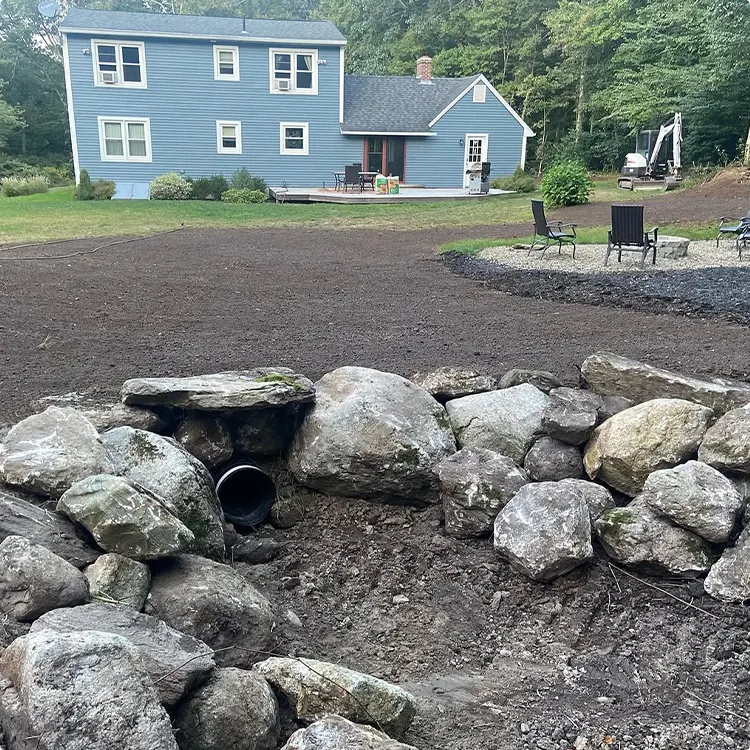
A curved wall made from large granite boulders forms the main feature, with a black corrugated culvert pipe tucked through its base. The wall is built as a dry stack.
The blue-sided farmhouse lies beyond the freshly graded lawn, which reaches toward it. In the distance, a gravel seating area holds multiple Adirondack chairs.
The landscape is still in progress, with the lawn not yet filled in. The wall provides a natural structure, and once grass fills in, the culvert pipe will become a natural yard element, according to the source claim.
Limestone Terrace Flower Bed
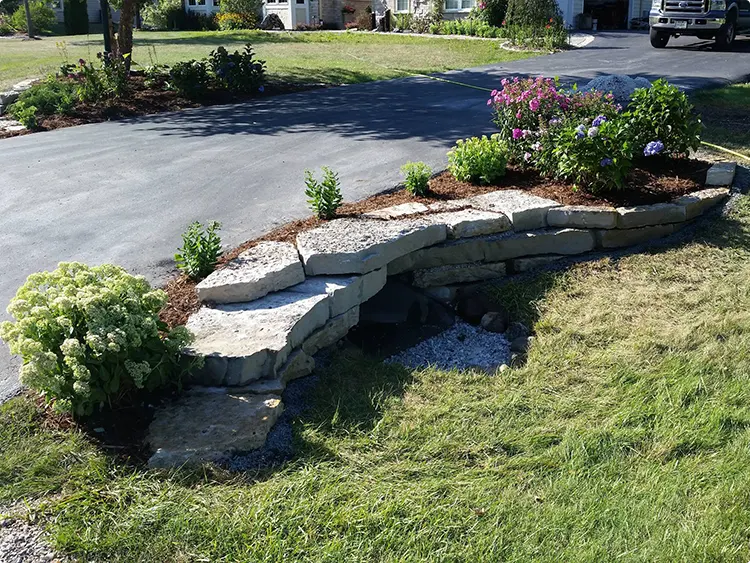
A driveway culvert is enclosed by a low limestone retaining wall. A large, flat limestone slab curves around the culvert to form the wall, which also doubles as a planting bed.
Dark mulch fills the planting bed held back by the low wall. A small tree, a shrub, and a hydrangea are planted there, with all three spilling over the wall.
Around the driveway culvert, a layered stone border can look polished and natural at the same time. It resembles natural growth, so using one here is a smart move.
Solar Culvert Lighting
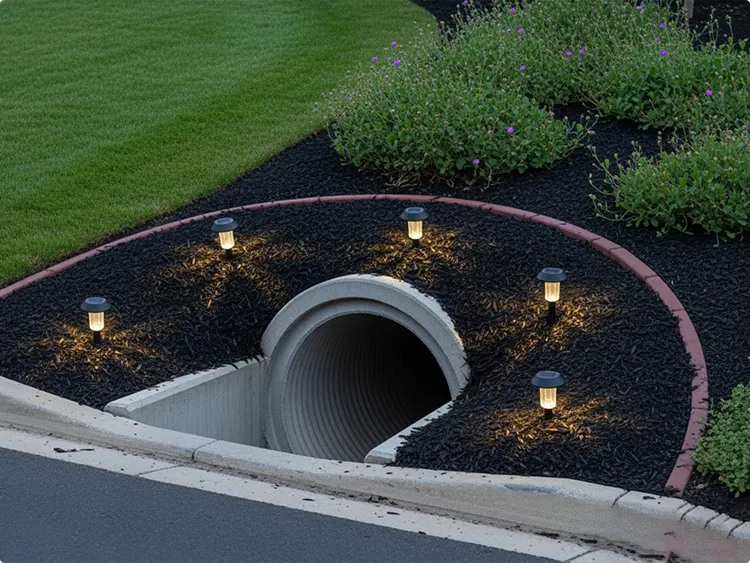
The concrete culvert sits within a curved planting bed filled with black dark mulch. At its pipe opening, small solar stake lights are set in a semicircle.
At dusk, the solar lights emit a warm glow that makes the culvert visible and decorative. A purple flowering shrub is planted in the mulch bed, and the lighting makes the culvert look intentional.
Black mulch and solar lights can turn a basic culvert into a nighttime feature. Add both to give the culvert a more defined presence after dark.