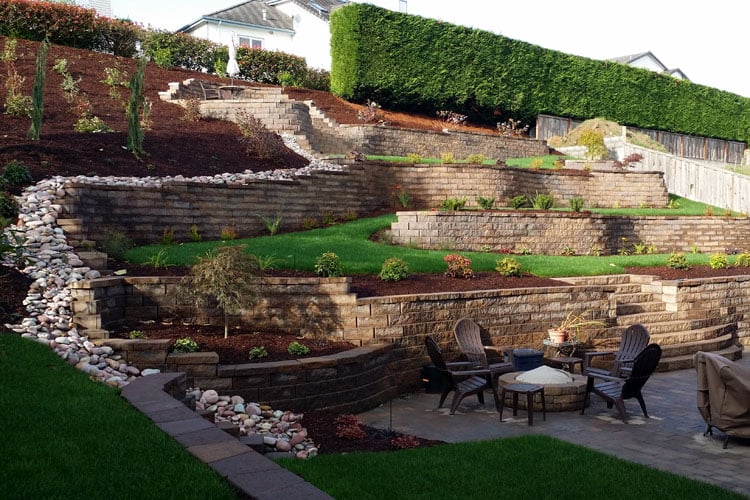
Ever looked at a sloping part of your yard and just felt stumped? I know I have! But here’s the secret: that tricky spot is actually your ticket to a super functional and gorgeous outdoor space.
A retaining wall is the perfect solution for taming unruly terrain and stopping erosion in its tracks. You can build them from all sorts of materials like wood, stone, or concrete to perfectly match your home’s vibe.
Whether you want to build a cute little raised garden or install a seriously modern structure, these walls need to be strong and stylish. I’ve pulled together some of the best retaining wall ideas to get you inspired.
From simple DIY projects to more elaborate designs, you’ll find everything you need to boost your property value and create a landscape you’ll absolutely love.
Retaining Wall Design Ideas
1. Budget Wisely

This amazing backyard features a really big retaining wall that flows into an elevated platform framed by columns. You might think these features are made from natural stone, but they’re actually a much more budget friendly artificial stone.
Saving money here allows homeowners to splurge on other cool things like a wrought iron fence and a wood trellis.
2. Bridge The Gap

In this backyard, natural elements like mulch and greenery feel a little separate from modern touches like gravel and concrete pavers. These different styles are brought together by the mixed material retaining wall that divides the two areas.
Using concrete, iron, and stained wood in the wall creates a sense of continuity throughout the whole space.
3. Curves and Swerves

While retaining walls are often functional, they can also be just for looks. Here, a wall has been used to create a raised garden bed instead of serving a more structural purpose.
The winding shape of the wall adds visual interest to the yard and softens the boxy angles of the house next to it.
4. Find Your Coordinates

This backyard has a patio that’s already made of russet colored stones with bits of gray mixed in. When it was time to add a retaining wall, they continued that color story.
Even though the concrete blocks in the wall are rougher and more porous than the patio pavers, the similar colors help them flow together naturally.
5. Hedge Your Bets

When your yard is split into multiple levels with retaining walls, you can really get creative with your landscaping. The top level of this yard is framed by neatly trimmed evergreen hedges, while the lowest level will soon be covered in mossy ground cover.
Planting flowers in the middle tier will be a fun way to add a pop of color and break up all the green.
6. Fake It Til You Make It

If natural stone is out of your budget, artificial stone can be a great alternative. Faux stone veneers are durable and long lasting and can be half the price of natural stone.
Artificial stone also gives you a bit more control over color, as you can see from the subtle, smoky shading in this retaining wall.
7. Designer Impostor

If you love the look of traditional red brick but don’t have the budget to hire a mason, concrete blocks can be a budget friendly alternative.
These rust colored blocks give you that brick look but are pretty simple to install yourself. Colorful caladium plants echo the rich reddish color of the concrete stones.
8. Mix It Up

As a general rule, your landscaping should go with the architecture of your home. But sometimes, you need to create a little contrast.
This contemporary home felt a bit sterile, but adding a limestone boulder retaining wall with lush greenery gives it a cozy, organic vibe.
9. Carve Out Your Space

In this terraced backyard, a hillside has been leveled out into flat sections, which gives it a staircase like effect.
The rough hewn gray sandstone has been used in the lower retaining wall and the upper wall and staircase, giving the whole space a cohesive feel.
10. Step It Up

Retaining walls are the perfect way to turn a steep yard into a landscape that’s easier to get around. The walls in this multi level side yard use a combination of rough edged slate and basalt.
Mixing materials like this adds extra colors and textures for a more layered look.
11. Here Comes The Sun

It’s always so important to keep your environment in mind when you’re designing your landscaping. You can tell this house is in a hot, dry place because of the drought tolerant plants like agave and sedge.
Dark stone absorbs light and holds heat, so it wouldn’t be a good choice for this climate. The lighter colored limestone in the walkway and retaining wall is a much better option.
12. Stepping Stones

Outdoor staircases are a common sight in split level backyards because they create a way for people to move between multiple spaces. Here, a stone staircase has been built right into the concrete block retaining wall.
Since the stairs use the same capstone and facade as the wall, the whole installation has a really cohesive feel.
13. Shift Your Shapes

This modern home is surrounded by a poured concrete retaining wall, but it doesn’t feel cold or institutional. That’s because they used multiple shapes and forms.
While the wall on the left side of the staircase is sharp and angular, the wall on the right is a series of tiered curves. The spiky plants in the planters have a chaotic feel that contrasts so cleverly against the smooth concrete.
14. Mellow and Modern
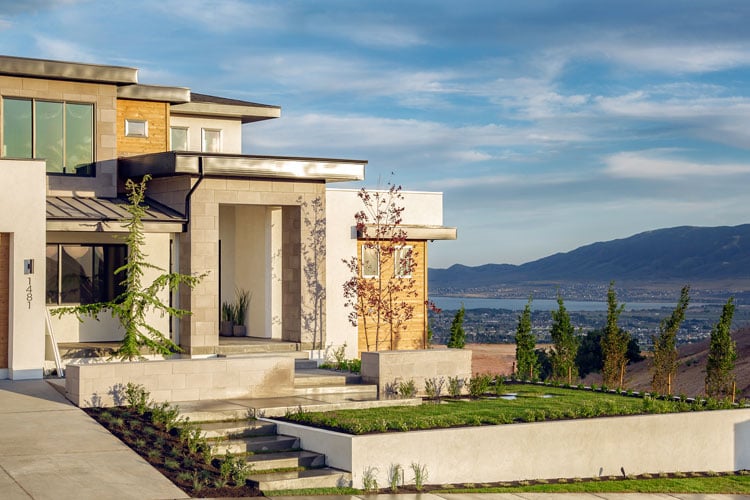
Modern architecture often uses elements like gray concrete, black iron, and large panes of glass. While this look is striking, it can also feel a little sterile.
This modern waterfront home feels warm and welcoming thanks to the earthy, tan undertones in the poured concrete walls. Honey toned wood accents complete the look.
15. Consistency Is Key

This charming suburban home and the retaining wall around it are both built from the same gray brick. Using the same materials throughout your design will give your home a more polished look and really amp up your curb appeal.
The raised garden bed created by the wall contains trees with dense foliage, which creates shade and adds a sense of privacy.
16. Shop Local

One of the easiest ways to keep your costs down when you’re building a retaining wall is to use materials that are close to home, because it will save you money on transportation.
The Pennsylvania fieldstone you see here is really popular on the East coast since its availability in that area makes it more affordable.
17. Staggering Style

One of the downsides of using wood is its rigidity. Unlike poured concrete or concrete blocks, wood doesn’t give you the freedom to create curved lines.
Stepping up different sections of a wood retaining wall is a simple way to add an interesting style element to an otherwise simple design.
18. Box It Up

For people who live in condos or apartment complexes, decorative low profile retaining walls can be a really nice way to create separation between neighboring units.
This angular wall unit gets some extra height from the neatly trimmed box hedge running along its top edge.
19. Ahead of The Curve

If your yard doesn’t have a steep slope but is a little uneven, a small retaining wall can still be a big help. This winding sandstone retaining wall visually levels out the yard while separating the garden from the grass.
The rough cut of the stones is a great match for the wildly abundant pink and white petunias that are overflowing over the wall.
20. Go Big and Go Home

Building your home on a hillside lets you play with some really unusual architectural layouts. This mountain retreat has a two story building on the lower ground that turns into a one story home on top of the hill.
A retaining wall this high should definitely be built by a professional to make sure it’s stable.
21. Keep It Casual

The really steep hill this home sits on required a ton of hardscaping to make the space functional. If they had been built with different materials, things like a long staircase, low columns, and rounded retaining walls could have made the space feel too formal and stuffy.
Leaving the stone rough and rustic gives this entrance a more appealing and accessible vibe.
22. Break The Mold

Even though poured concrete retaining walls usually have a modern aesthetic, they can be surprisingly adaptable.
The subtle color variation in this poured concrete wall adds a sense of warmth that plays perfectly off the stuccoed walls and Spanish tiled roof of this Southwestern style home.
23. Desert Drainage

If you live in a dry environment, you might think you can get away without adding drainage to your retaining wall. But drainage is a super important part of retaining walls, even in areas that don’t get much rain.
Here, a simple PVC pipe blends in seamlessly with the textured white concrete blocks.
24. Wall of Many Colors

The huge size and steepness of this yard required a massive and sturdy retaining wall. The choice to use multiple colors of stone keeps this bulky structure from looking too imposing, as it blends in beautifully with the colorful foliage beyond.
Including reddish stone in the wall helps smooth the transition between the stone staircase and the elevated brick patio.
25. Dual-Purpose Drainage

With a retaining wall this tall, drainage was an absolute must. Instead of hiding the drainage solution, consider turning it into a visible water feature.
This backyard has a zen quality and a sense of movement thanks to the cleverly planned design.
26. Tiering Up

If your yard has a steep drop off, installing multiple low retaining walls is a great way to soften the slope and make the decline seem more gradual.
The buttery golden color of this block terrace brightens up the landscape and makes the grassy bunches of vetiver look even greener.
27. Cap It Off

When you’re surrounded by natural beauty like this dense forest, the last thing you want is for your retaining wall to steal the show. These buff colored concrete blocks have an earthy, neutral hue that blends in with the scenery instead of fighting it.
Adding capstones to the top of your wall will give the piece a more refined and finished feel.
28. Change Your Direction

If sustainability is a priority for you, reclaimed railway sleepers are a fantastic option for building retaining walls. Cutting them in different sizes and placing them vertically lets you play with different heights to create a wavelike effect.
In this yard, the oak sleepers have also been laid horizontally and filled with gravel to make a shallow staircase.
29. See The Bigger Picture

Retaining walls are a great way to transition between spaces in an uneven yard, but a standalone wall can feel a little out of place.
In this yard, the concrete blocks and capstones are carried upwards to create a tree planter and a designated play area, which helps the whole landscape design feel more intentional.
30. Sustain with Stain

Pressure treating the planks is so important if you want to extend the lifespan of your wood retaining wall. Besides enhancing the look, painting or staining the treated wood adds another layer of protection from the elements.
Here, a walnut brown stain takes knotted pine planks from plain to polished. Just be sure to wait until the wood has completely dried after pressure treating, or else the stain won’t stick.
31. Weatherproof Your Wood

While lumber and timber are often used to mean the same thing, the difference is that lumber describes wood that has been cut into planks, while timber refers to wood that is much less processed.
If you’re building a pine plank retaining wall like this one, be sure to pressure treat the lumber first to protect against the elements and make it last longer.
32. Cracking Up

If you need to install a retaining wall but want a more natural look, a boulder retaining wall might be the perfect compromise.
These boulders have gaps between them for drainage, which also lets plants like moss and creeping phlox break up the solid rock facade. This imperfect installation helps the space feel more spontaneous.
33. Nurture Nature

In a super steep yard like this one, retaining walls and other hardscaping elements are a must. But they run the risk of taking away from the natural beauty around your home.
You can avoid this by choosing a natural stone for your retaining walls, like the rough, earthy flagstone you see here. These rustic, unpolished walls are the perfect backdrop for these native plants.
34. Cohesive Cabin

Maybe the easiest way to make sure your retaining wall coordinates with your home’s architecture is to use the same materials. This vertical retaining wall uses the same wood and stain as the horizontal logs in the cozy cabin it borders.
Using leftover materials from your home’s construction is also a great way to make the most of your investment.
35. A Walk In The Woods

This reclaimed wood beam retaining wall has a naturalistic feel thanks to visible knots and the slight color changes from being weathered over time.
The wooden walkway is a deeper gray than the wall, which adds a little contrast and keeps the two structures from blending together.
36. Double Bed

The slope of this yard was so steep that it needed a stone staircase to travel between levels. Building a single retaining wall would have made the divide seem sharp and jarring.
Adding tiered garden beds supported by concrete pavers helps the transition feel softer and more natural.
37. Puzzle It Out

Building a retaining wall out of reclaimed granite blocks is possible, but it does take some patience and planning. Each layer needs to be as level as possible, which means you have to be thoughtful about fitting each block together.
This kind of rustic design doesn’t require mortar, but you might find that plants start to creep between the cracks.
38. Mixed Materials

Since retaining walls make such a strong visual impact, they can take attention away from the rest of your yard. These wood slat walls draw your eye up and back so you can take in the full view.
The long, narrow slats echo the shape of the stones in the retaining wall, which helps tie all the structures together. Meanwhile, the honey toned wood lightens up the heavy gray stonework.
39. Timeless Style

This quaint bungalow shows off several of the key characteristics of the Craftsman style of architecture, including columns, detailed wood trim, a wood and glass door, and a large covered front porch.
The Craftsman era was also defined by its use of natural building materials like this basalt retaining wall. Even though the Craftsman period ended almost a century ago, this home and the landscaping around it feel current and fresh.
40. Simple and Subtle

It’s hard to tell that this home is on a really steep slope because the gently curved retaining wall softens the visual impact of the dramatic dropoff.
The wall also doubles as a large raised garden bed, which further camouflages the structural feature and makes it feel more natural.
41. Choose Your Wood Wisely
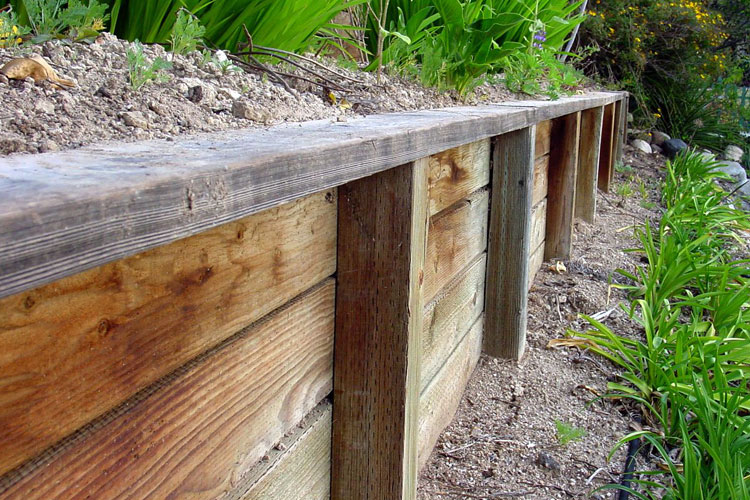
As we know, wood retaining walls are probably the simplest ones to DIY, but they don’t usually last as long as walls made from other materials. To get the longest lifespan out of your self built wall, be careful when you’re picking your wood.
Cedar and redwood are both resistant to rot and can last from ten to twenty years when they’re prepped and maintained correctly.
Pine or fir that is pressure treated and rated for ground contact can last as long as forty years in the right environment. Douglas fir is especially long lasting.
42. Optical Opportunities

If you have a modern or contemporary home, you have the chance to play with expected norms. This poured concrete retaining wall is asymmetrical, which gives it a cool, futuristic feel.
Since the concrete is a paler gray than the charcoal tile on the house, it creates the illusion that the front yard is deeper.
43. Blend Into The Background

While retaining walls can be striking visual focal points, some homeowners prefer these features to be a little less obvious.
This tiered sandstone retaining wall is similar enough in color to the warm beige house that it fades into the surroundings, letting the green lawn and foliage really shine.
44. Tasteful and Timeless

When you’re landscaping a large area, using multiple materials can help the space look less designed and more like it evolved naturally over time. The top part of this yard is hemmed in by a dark gray stacked stone retaining wall and staircase.
Meanwhile, the lower level is centered around a flagstone and granite stepped walkway lined by a decorative border of small boulders.
45. Chic Casual Cottage

English gardens became popular in the 18th century as a way to rebel against the more symmetrical, architectural gardens that were in style before. This less formal approach to planting creates a lush, romantic garden that feels totally organic.
This boulder retaining wall also has thin slabs of shale, which enhances the unstudied feel of the sprawling garden.
46. Take It To The Top

This low profile concrete block retaining wall has the look and feel of natural stone thanks to the addition of subtle coloring.
Adding matching capstones to concrete blocks can also make them feel more elevated and elegant.
47. Light It Up

If you’ve decided to hire a professional to install a retaining wall, it can give you the chance to go all out. Here, a gray brick retaining wall is part of a larger multi level feature that creates a grand entrance in front of this sophisticated home.
The recessed lighting under the capstone adds just the right amount of depth and drama.
48. Hot Tub Hideaway

The pastoral surroundings give this cozy cottage a magical, fairytale inspired quality. Shade trees and lush, tiered foliage are penned in by a gently curved fieldstone retaining wall.
The round shape of the secluded hot tub mimics the winding bend of the retaining wall. Fieldstone pavers tie the modern hot tub in with the quaint environment all around it.
49. Stone on Stone

If you have a large backyard, using multiple types of rock is a great way to break up the space. In this eclectic yard, earth toned flagstone retaining walls contrast against the gray and red mosaic patio.
An assortment of colorful flowers helps tie the different styles together.
50. Straight and Narrow

Building a home on a steep hillside and a narrow lot presents a lot of logistical challenges. This inaccessible backyard has been transformed thanks to a retaining wall and other hardscaping elements.
On the lower level, the retaining wall doubles as bench seating with a built in firepit. On the upper level, the wall works as a raised planter that hosts smaller plants alongside majestic palm trees.
51. A Work of Art

This yard has such a sharp incline that it would be almost impossible to turn the landscape into a usable outdoor space. Even if you can’t physically use your backyard, there’s no reason why you can’t enjoy the view.
This steep space has been terraced with wood retaining walls that form several garden beds that can be admired from a narrow patio down below.
52. Gabion Wall

This tiered outdoor structure is made of two levels of gabion walls, which use rectangular baskets built out of thick galvanized wire. These baskets are filled with rocks or crushed concrete, then stacked on top of each other to create a retaining wall.
Gabion walls are most often used in industrial settings to shore up bridges or embankments, but their low price has made them increasingly popular in residential settings.
53. Downhill Slope

This yard originally had an elevated retaining wall that was at a right angle to the sidewalk. While it made the space more functional, the sharp transition was a little harsh to look at.
Building another retaining wall with a slight downward slope helped soften the profile of this property by creating a feeling of progression.
54. Build It Up

Retaining walls are usually used to create flat areas on sloped land, but this design element can also be used to add elevation to a single level space.
This dry stacked retaining wall has been used to create a raised garden bed full of succulents, wildflowers, and other low maintenance plants.