Having a stair runner is a wonderful feature, and for many, this is an element that will need to serve a variety of purposes.
Whether your runner’s main job is to add a pop of color, protect wooden stairs from wear, or provide a safer surface for children and pets, taking the time to design the space can make a big difference.
Today, I’m sharing some of my favorite stair runner ideas to help you create a look that is practical while also being a space that you can use to showcase your personal style.
1. Artistic Painted Solutions
Painting a stair runner is a fantastic way to get a high-end look without the high-end price tag, but it definitely takes more of your time than installing a fabric one.
Depending on the execution, painted stairs can give off any kind of vibe, from elegant to beachy or even bohemian. Using paint on the risers and step surfaces gives you that classic runner look without any of the tripping hazards carpet can sometimes present.
A painted runner is a really smart choice for basement stairs, where moisture can be a problem and potentially ruin a carpet. You absolutely have to use a paint that’s made for floors, because other types of paint will chip or wear away way too fast with regular foot traffic. Some of my favorite creative painted stair runner ideas include:
- An ombre effect, where you start with one color at the top step and another at the bottom, blending them together right in the middle.
- Painting the risers in a rainbow of colors, whether you go for brights or pastels.
- A design of flowers or trailing vines that climb their way up the staircase.
- Fun patterns like chevron stripes, tile-inspired designs, or even polka dots.
- Using literary or inspirational quotes, with a few words painted on each riser so you can read the full message from the bottom of the stairs.


2. Stylish Striped Inspiration
I’ll be honest, getting a striped runner installed perfectly so the lines are even with the stair angles can be a bit of a challenge. But when it’s done right, stripes bring such a classic design element to just about any decor style.
Stripes running vertically up the stairs can make a staircase feel taller and narrower, while horizontal stripes do the opposite. When it comes to striped patterns, you can go wide or thin, simple or complex.
You can even consider some really unique options like chevron, pinstripes, or those nautical-inspired Breton stripes.
If you have a very specific striped pattern in mind, painting the runner is a great alternative to spending forever searching for the perfect rug.


3. Stair Runner Ideas Incorporating Animal Prints
Animal print runners bring such a wild, tribal feeling into your home’s decor. Using them as a stair carpet can add either a touch of whimsy or a layer of elegance to your entryway or hall.
Prints like zebra, leopard, cheetah, and even snake scales are out there in pretty much any color you can think of. Some animal print carpets are really bold with high contrast, while others have a more subtle, monochromatic feel.
If you love that exotic vibe but find some prints a little too intense, you could always look for tribal-inspired carpeting.
These tribal patterns can include lines and shapes from Indian, African, Asian, and Native American designs, in both large and small prints. And if you already have tribal or animal print rugs at the top and bottom of your stairs, you can connect them beautifully with a natural sisal runner.


4. Elegant Neutral Colors
If your home already has carpet, there’s a good chance it’s a neutral shade of white, tan, or gray. If you’re not looking to make your staircase a huge statement piece, you can just use that same carpet for your stair runner.
When you’re picking out stair runner rods to hold everything in place, try to match them to any metals or colors already on the staircase.
Some of the most popular neutral materials are sisal and jute. Seagrass, on the other hand, has a hard texture that doesn’t really work for flexing around stair treads and risers.
So, if you’re a big fan of seagrass rugs, just know you’ll need to find a different material for your stairs. These natural neutrals can be tricky to spot clean because they’re known for getting water spots and stains.




5. Discovering Unique Styles
Adding accessories to your stair runner is such a great way to put a unique spin on your hallway or entryway. Things like elegant brass stair rods or even just brass tacks can give a vintage rug pattern a truly classic flair.
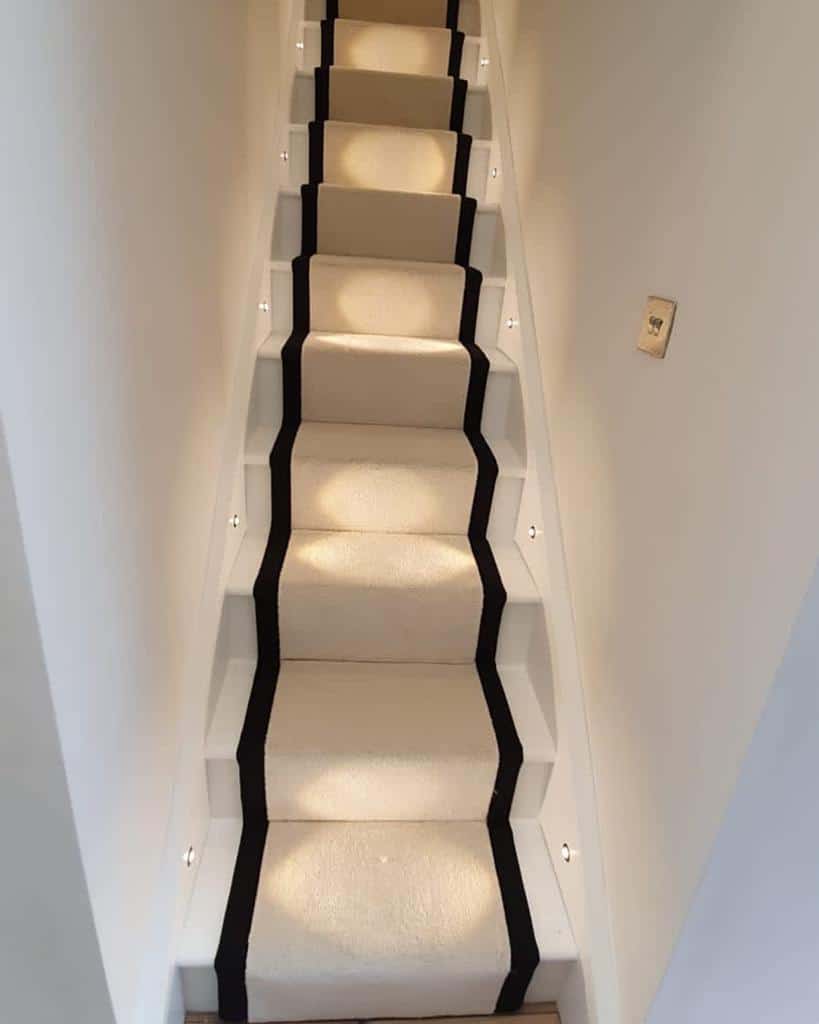
Wide edge binding and borders in a contrasting color create such an interesting boundary between the runner and the stair’s tread and riser.
You can elevate a neutral wool runner with just a narrow band of cotton binding in a color like red or blue, or another shade from your home’s color scheme.
A plain jute runner can really come to life with a wide, patterned border, maybe even a print that you have somewhere else in the room. A leather or faux leather border is super durable and gets a beautiful, rich patina over time, but just a heads up, it can be on the pricey side.


6. Embracing Modern Designs
With the simplicity that defines modern design, you might even wonder if you should add a stairway or hallway runner to your home at all.
I get it; bare wood stairs and unadorned floors totally fit with that minimalist decor. However, if you want to soften your trip between floors, there are several modern runner options that are just perfect.
If your modern home has a monochromatic color scheme, a solid color for your stair runner is a great way to go. Just keep in mind that stains will definitely stand out more on a solid color than on a print.
I think a solid black runner could look absolutely perfect in a modern, minimalistic home.


7. Diving Into Patterns
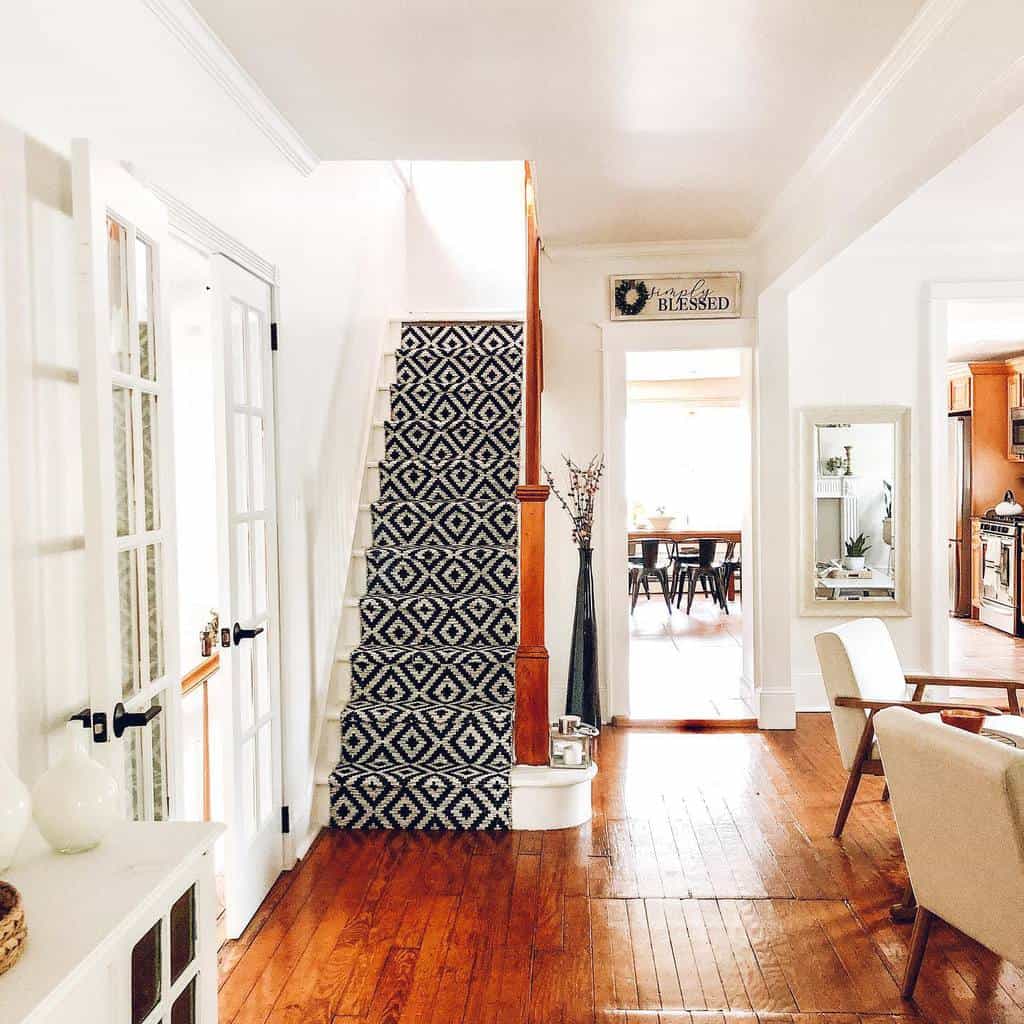
Patterned runners are such a fun way to let your personality shine on your staircase. But it brings up a big question: is a large or small print better?
My advice is to pick a pattern and material that you truly love, but definitely keep in mind that big, large-scale patterns might not get enough repetition to show off on a standard-sized staircase.
On the other hand, a really small pattern can sometimes just look like a texture from a distance or get lost on very wide stairs.
If you have a staircase with a landing or those wedge-shaped “pie turns,” trying to line up a complicated pattern can get a little tricky.
For staircases that are curved or have elaborate designs, I usually think it’s best to stick with a solid color for the runner or go with a very simple pattern. This helps avoid making the stairs feel dizzying or too distracting.


8. Exploring Oriental Influences
Oriental rugs are just one of those timeless, time-tested materials in home decor. Their colors and patterns are practically endless, and they can fit into so many different home styles. An oriental stair runner looks just as elegant with carpet rods as it does without them.
You can find genuine antique oriental runners, but you should be prepared to spend a good amount on those vintage treasures. The good news is, you can usually find new, reasonably priced runners and matching rugs in your favorite patterns online.
Oriental rugs often get their names from the city or region where they’re made. Their patterns can include anything from flowers and lines to abstract tribal designs.

9. Crafting Your Own Stair Runners
It’s totally possible to get that polished staircase runner look without bringing in a professional. All you need to do is buy one or two regular hallway runner rugs and a high-quality staple gun.
If you’re after a padded feel, just add a rug pad underneath. To give your DIY runner a little something extra, you can install metallic stair rods at the corner of each riser.
If you’re just moving into a new place, I’d wait until the movers are gone before you start this project. That way, your stair tread is only dealing with everyday wear and not the heavy traffic of movers carrying things up and down.
And if you’re refinishing or repainting your staircase before you install the rug, you have to let that finish dry completely first, which can take three to four weeks.