Having a basement is a bonus that offers endless possibilities for creating a functional and comfortable new living area. However, the characteristically low ceiling can sometimes feel overwhelming to decorate.
Fear not! Here are some of my favourite low basement ceiling ideas to help you transform your space into a cozy, functional, and visually stunning retreat that defies its vertical limits.
1. Artistic Strokes
When you’re thinking about a low basement ceiling, you can go one of two ways with paint. You can either embrace all those exposed elements or hide them all behind some fresh drywall or paneling.
The path you choose really comes down to the style you’re going for in your home. I personally think that painting the exposed stuff gives you this cool, edgy industrial vibe that works so well with rustic or modern decor.
Drywall is what everyone turns to for that classic, smooth ceiling look. No matter what, you absolutely need a good primer to get that flawless finish. If you decide to paint the exposed ductwork, joists, and vents, just make sure you grab a paint that’s made to stick to all those different surfaces like metal, wood, and plastic.
You could paint the entire ceiling one beautiful, solid color, or maybe even add some fun wallpapered sections for a pop of personality. I love the idea of adding some sleek crown molding or embossed ceiling panels. It brings in so much elegance without making the room feel any shorter.


2. Elegance Redefined
Okay, can we talk about coffered ceilings? The word “coffered” is just an architectural way of saying “indented.” Usually, the ceiling itself is flat, and you get that beautiful coffered look from the pattern of exposed beams.
It’s one of those more formal ceiling ideas, especially for a basement, and it brings such an elegance to a space that might have been unfinished before. A coffered design is also a fantastic choice if you want to make the room’s acoustics a little better.
The beams are arranged in a grid of squares, octagons, or other cool geometric shapes. Inside those shapes, the ceiling can be anything from smooth drywall to embossed tiles or even wood planks.
Some people worry that these structured ceilings can be a bit much for a low basement, but I think as long as the design isn’t too deep, it works beautifully. If you already have a tray ceiling, you could even fill in that indented area with coffered beams for a whole new look.


3. Embracing Rustic Aesthetics
I just love the rustic look that you get from rough or unfinished wood paneling in a basement. It’s a perfect fit for a low ceiling because you can nail it right onto the floor joist grid from the level above.
When you’re thinking about low-profile renovation ideas, a wood panel ceiling is such a great choice since it takes up less than an inch of your room’s height.
Now, this next idea is one of the most unique basement ceiling options out there, but I think it’s so cool. Corrugated metal panels, which you usually see on farmhouse or barn roofs, actually work so well indoors.
Their dull metallic finish is great for reflecting light and it adds a really edgy, industrial feel to your basement remodel. I think corrugated metal would be an amazing ceiling material for a rustic man cave.




4. Illuminating Spaces
You can totally get rid of any dark or gloomy basement feelings by making the most of the lighting in the room. First off, take advantage of any windows you already have down there.
You don’t want to block those natural light sources with fussy window treatments. If you need some privacy, try installing glass that’s lightly frosted or has a nice texture.
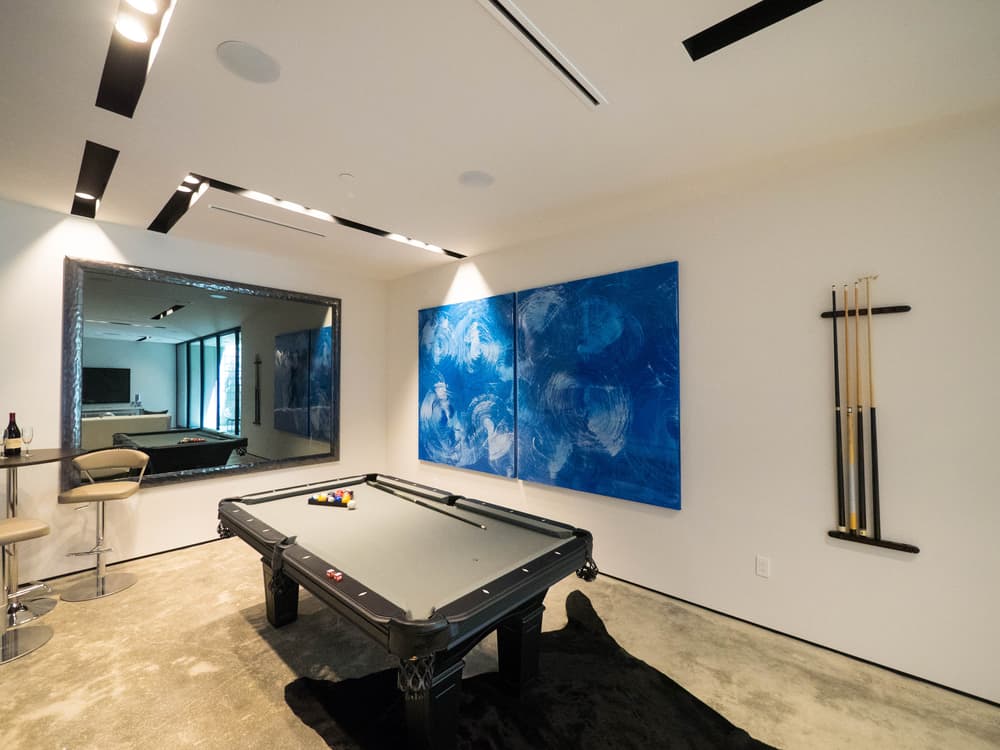
The design of your ceiling lights is also super important for keeping your basement feeling light and airy. I’d go with light fixtures that are low profile, like recessed can lighting or track lighting that’s nearly flat.
To get away from any harsh shadows that can make a low ceiling feel like it’s closing in, try to limit any lamps that are super bright. If you’re thinking about using wall sconces, putting them up high along one wall can really help make the room feel taller.


5. Exploring Dark Tones
Painting a low, exposed basement ceiling black is such a clever trick. It helps all that ductwork and other things you’d rather not see just fade into the background. Drop ceiling tiles, tin panels, and even exposed beams look so chic when they’re painted with a flat black finish.
The key to making sure the darkness feels cozy and not depressing is to bring in as much light as you can. I’d keep the windows clear to let all that natural light stream in, and install recessed or flat light fixtures on the ceiling.
If you’re going with a black ceiling in your basement renovation, you’ll want to balance that heavy feeling by adding black somewhere else in the room. You could paint support posts or columns black, which creates a really nice continuous line coming down from the ceiling joists.
Try to keep your walls a light color, but then look for furniture, rugs, or fabrics that have a little touch of black in them.


6. Low Basement Ceiling Ideas Embellishing With Beadboard
A beadboard ceiling is such a budget-friendly idea for a basement renovation. The panels are available in lots of different sizes.
Typically, this kind of wood paneling comes in planks that are two to three inches wide, with a skinny half-round “bead” that runs vertically between each plank. You can also find beadboard panels for ceilings or walls with much wider planks.
While beadboard is usually painted white, it also looks amazing in black or any other color you can dream up. I just love that classic white beadboard look for homes with a coastal, cottage, beach, Victorian, or shabby chic vibe.
It’s also a perfect low ceiling idea for a farmhouse style home, especially if you pair it with wider shiplap on one or more walls.
Some of the less expensive beadboard is made to be painted, while other wood ceiling panels are made from beautiful, pricier woods that you can stain and varnish.
To get a modern space that feels connected, try painting your basement walls white or cream. Then you can create a wood plank ceiling and put in a wood floor, or tiles that look like wood, in a similar maple, birch, or oak tone.


7. Contemporary Charm
Modern style is all about simplicity, so you really can’t miss with a simple, smooth white basement ceiling. For some people, though, that might feel a little boring. A great way to add some simple texture to a modern renovated basement is with geometric tin ceiling tiles.
If you have a sealed concrete floor, you might think about painting your ceiling a similar gray color instead of the usual black or white.
A suspended ceiling, or a drop ceiling, is made to hide all the exposed building infrastructure. Because of that, it really helps to give a modern finished basement a more refined look.
Drop ceilings are a popular choice because if you ever get water damage from the floor above, you only have to replace the damaged tiles instead of the whole ceiling. While it could work in a basement with higher ceilings, it’s usually too deep for a low-profile space.
Wood paneling is such a bold and beautiful choice for a modern low basement. Instead of doing the whole ceiling in wood, you could create an offset, inlaid rectangle of lightly stained wood beams. I think wood paneling looks especially good in a basement that has a mid-century modern style.


8. Refreshing Ceiling Concepts
Ceilings don’t always get the attention they deserve, but they have the potential to be the coolest part of a renovated basement. You could make your lower ceiling feel endless by creating a starry night effect on plywood.
To do it, you drill tons of holes in plywood panels, then prime and paint them in mottled shades of dark blue. As you mount the panels to the joists above, you insert light fiber wires into the holes. How cool is that?
A recessed basement ceiling is the perfect spot to hide surround sound speakers next to dimmable lights. This is an absolute must if you’re turning your low-ceiling basement into a home theater.
You can paint all sorts of futuristic designs and patterns on the ceiling, or you could use a premade mural to stick on some overhead color. I also love the idea of hiding LED lights behind crown molding for an ambient lighting effect that you can change with a remote control.
Embossed tin ceiling tiles come in a crazy number of patterns these days. Some have that traditional, elaborate scrollwork, while others feature much simpler designs. Some even have laser-cut patterns that let light shine through them.
You could mix and match filigree, flat wood, and glossy black ceiling tiles for a truly unique basement ceiling.