Vertical gardening is one of the latest trends in the home and garden world, offering a dynamic way to bring nature into small spaces.
Discover the art of using these ideas for your own yard and learn how to masterfully integrate this style into your home.
1. Aromatic Heights
A vertical herb garden is such a fantastic idea, even if you have plenty of outdoor growing room. I love growing the herbs that I use the most, and it turns out that most of them are perfectly suited for these types of gardens.
When you’re picking out your plants, look for smaller ones with minimal root systems. They fit so well into vertical containers and need less soil, which keeps everything nice and lightweight.
Here’s a little tip I learned the hard way. Be sure to keep mint in its own separate container. It tends to grow like crazy and will absolutely take over the other plants in your garden.
It’s also a smart idea to arrange your herbs based on how much water they need. You can place herbs that like drier conditions, like rosemary or lavender, above the ones that will appreciate the extra runoff from watering, such as bee balm or spearmint.


2. Elevate Your Space
Wall planter ideas are such a creative way to turn spaces with limited room into incredibly lush, living displays. I love this trend!
By using vertical surfaces like walls, fences, or balconies, these gardens really maximize what you have and bring a touch of nature into more urban settings.
The possibilities are truly endless, from succulents that cascade down to all sorts of vibrant flowering plants.
Mixing up textures, colors, and different types of plants can result in some visually stunning designs. Wall planters also come with practical perks, like better air quality and even some insulation.
Whether you set them up indoors or out, these gardens introduce greenery to the most unexpected places, which enhances the look of your space and fosters a greener way of life.


3. Reclaimed Elegance
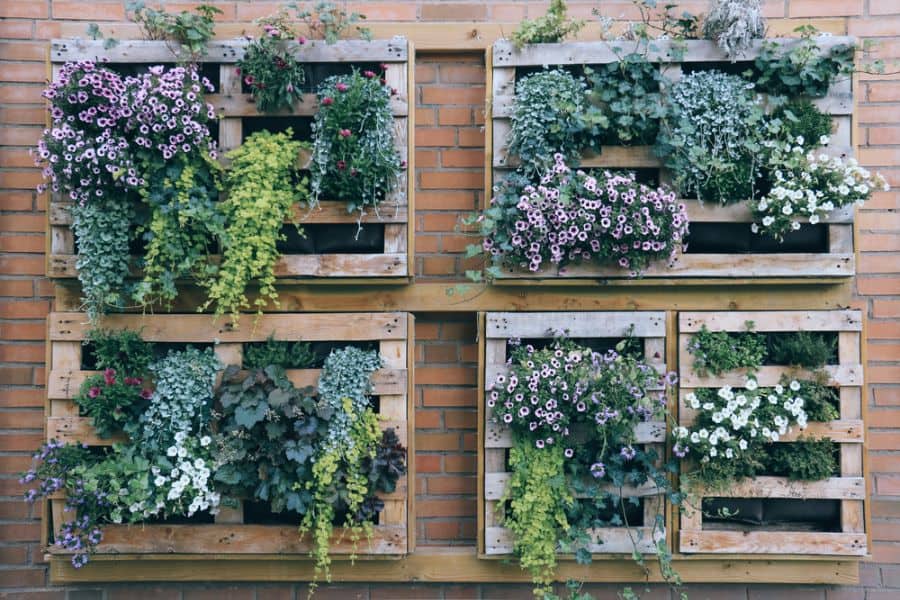
A basic wooden pallet can be transformed into a stunning planter box wall feature or simply used as it is to hold your favorite plants.
One of the most popular ideas I’ve seen in farmhouse-style homes is using pallet wood to construct a gardening shelf or a whole series of bins mounted on the wall. I love this because it’s so resourceful!
Repurposing wood pallets is one of the easiest and most budget-friendly DIY vertical garden projects you can tackle. You can just prop a pallet up against a fence or wall and then tuck small planting containers right into the gaps.
If you want to do just a little more work, you can pry off every other plank and nail it to the one above it to create simple shelves. It’s a game changer! You can also paint a pallet-based structure or stain it to match your other furnishings.
If your décor has a particularly rustic vibe, leaving the wood unfinished might look even better.


4. Unconventional Beauty
With just a bit of imagination, almost any container can be turned into a home for your vertical garden. It’s so inspiring! For a unique and colorful garden, you could plant tiny succulents in the holes of bricks that are stood on their ends.
You can even use a ceramic drill bit to create drainage holes in mugs from a thrift store and then hang them from a mug rack.
You can make a wall garden along a blank fence or wall by hanging a series of small potted plants in really creative ways. For instance, you could use containers shaped like birds and fill each one with vining plants or different kinds of herbs.
Then, paint a simple tree rising up from the ground, with its branches painted so each bird looks like it’s perched on one. Add a few painted butterflies flying whimsically between the branches, and place a row of colorful potted plants on the ground to complete your living wall mural. How beautiful is that?!


See more about – Garden Gate Ideas
5. Exploring Vertical Garden Ideas
A vertical gardening planter can be made from pretty much any kind of container or material. You can turn basic clay pots, DIY wooden planters, a hanging basket, or even tin cans you’ve spray-painted into useful containers for your vertical garden.
Lightweight felt panels that are covered in pockets work especially well for things like herbs and succulents.
If you’re short on backyard space, you can design a vegetable planter box garden right along your deck or patio. It’s a fantastic solution! When you’re setting up a vertical vegetable garden, stack each row based on the weight of the plants.
The heavier plants should be at ground level, while the lighter ones can go up high.


6. Contemporary Oasis
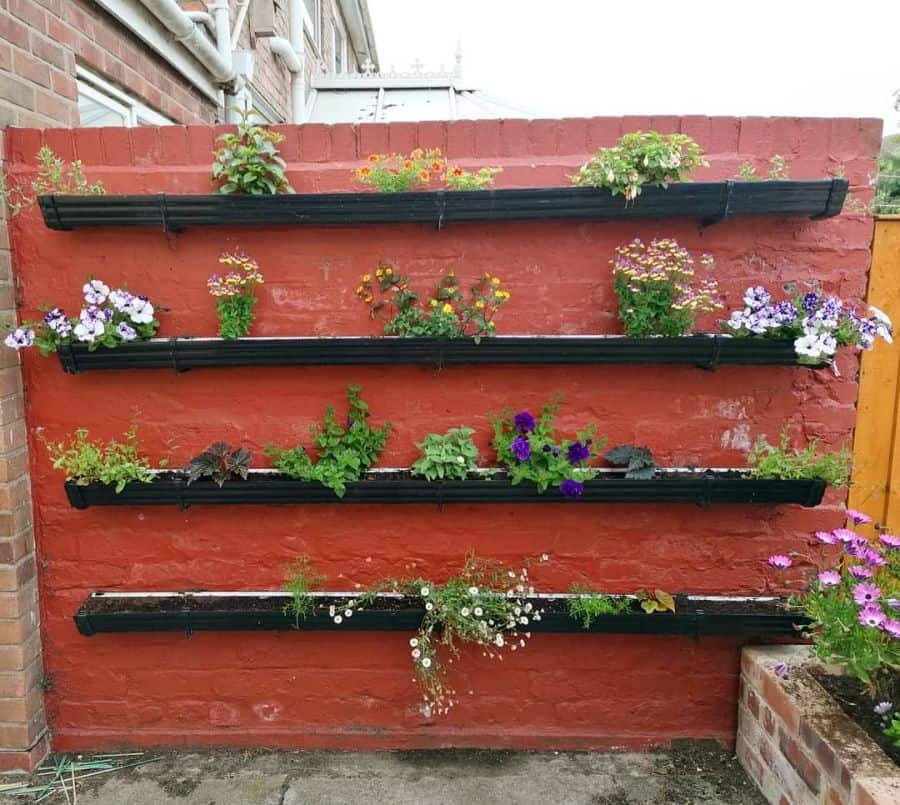
Modern vertical gardening concepts bring together minimalist design with the beauty of nature. Simple, understated plants work best here, where the focus is often just as much on the structure as it is on the plants themselves.
Using plants with unusual shapes or colors is a great way to add an exciting twist to an otherwise uncomplicated modern design.
Many homes with modern interiors stick to a monochromatic color scheme. While your plants can definitely add a pop of color, you could also look to succulents to create a stunning black-and-white vertical garden.
You can shop for black-toned aeonium, “Black Knight” echeveria, white wooly Senecio, and white-flowering gray lithops, which are also called “Living Stones.”
I have no doubt that your monochromatic vertical garden will be attracting compliments from visitors for years to come.


7. Innovative Support Structures
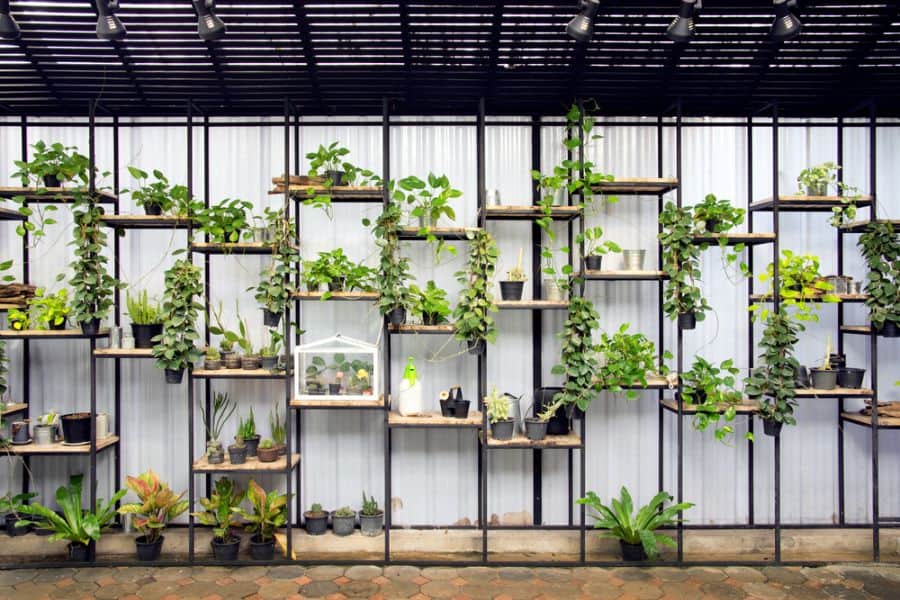
Gardening is a hobby that so often includes a lot of creative recycling, which I just love. Pretty much any kind of shelf or stand can be repurposed into a plant holder.
An old-fashioned baker’s rack with its wire metal shelves is just perfect for a vertical garden stand, but really any type of shelving system will work. You can even mix and match wood and metal structures to give your vertical gardening zone a whimsical or eclectic feel.
A wall that’s covered in floating shelves topped with plants makes for a really attractive vertical display. If you’re getting into vegetable gardening, you’ll need a sturdier stand than if you were just planting lightweight herbs or flowers.
Root vegetables that require deeper soil, like carrots, can get too heavy for some shelves. A good rule of thumb is to keep heavier vegetables on the bottom shelf or just put them in planters on the ground in front of your stand.




8. Heightened Serenity
A vertical or hanging garden is such a beautiful and practical touch for any balcony, rooftop, patio, or other urban outdoor spot. If your landlord or homeowner’s association allows it, you can plant lovely trailing plants that will cascade over your balcony railing.
If not, you can mount a vertical planter on one wall and arrange several potted plants in front of it. Another idea I love is to plant a small patch of grass below your vertical garden so you can still enjoy the feeling of fresh grass on your bare feet, even in the middle of a concrete jungle.
You can absolutely grow an edible garden on a balcony, too. With pre-cut wood, you can build a DIY vertical herb planter in less than three hours, and it only takes up nine square feet of floor space.
This same structure is perfect for growing microgreens and lettuce for your salads.


9. Embracing Greenery
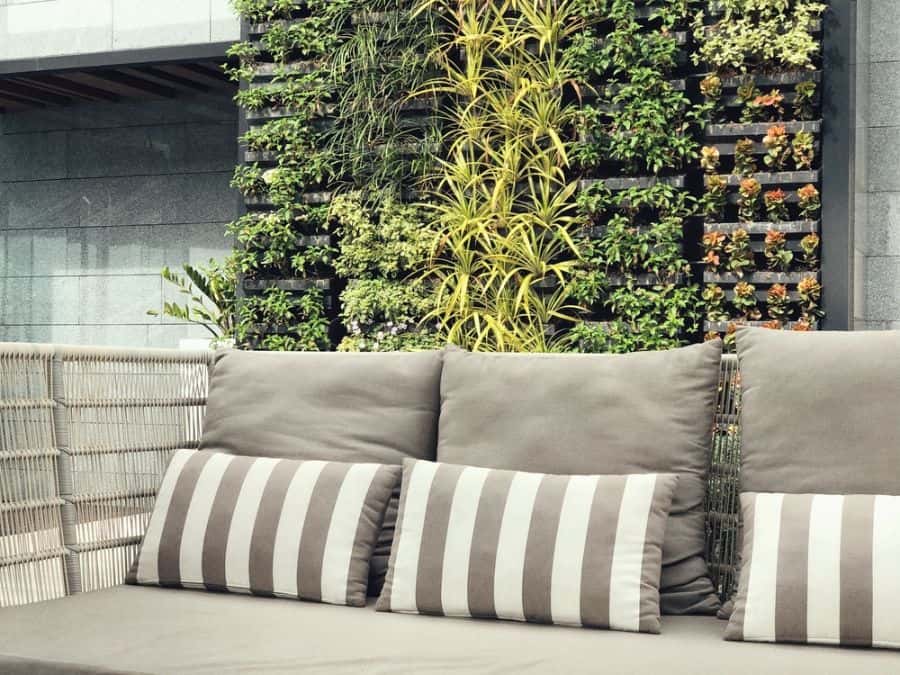
DIY vertical garden ideas aren’t just for the great outdoors! A small indoor vertical garden can absolutely thrive in a sunny room. You can find a living wall planter for inside your home for around $30, or you could buy a vertical stacking system for about $75.
An empty corner can be totally transformed into a hanging garden area with a collection of planters filled with flowering and trailing plants.
Indoor succulent gardens are a huge trend in many homes right now. Succulents are so low-maintenance and come in an incredible variety of shapes and colors. Some types actually do better in an indoor environment, especially if you happen to live in a colder climate.
You can fill a frame-shaped wall container with blue agave, purple prickly pear, red echeveria, and yellow sedum to create a gorgeous, rainbow-like indoor garden.


10. Nature’s Canvas
A living wall is a feature that will get everyone talking, whether it’s located inside or out. A vertical wall garden can be as large or small as you want it to be. I’ve seen some of the most impressive structures take up an entire interior wall in a living room or dining area!
A vertical garden covered in trailing, flowering, and climbing plants creates a stunning focal point on your patio or in another outdoor space.
Having an herb garden living wall in your kitchen or just outside the window is a really practical way to get into vertical gardening.
It’s the best way to make sure you always have your favorite herbs handy for both health purposes and cooking. Plus, DIY gardening means you can be sure your herbs are organic and free from any harmful pesticides.


11. Effortlessly Green
Getting into vertical garden design doesn’t have to be complicated at all. In fact, if you want one of the easiest ways to start, you can just buy a pre-made vertical planter structure.
Another simple way to begin is by placing your plants in small galvanized buckets and using metal hooks to hang them from a wall or fence you already have.
I love this next idea. An old ladder can be easily repurposed into a holder for your planters. Just prop the ladder against a wall or fence and hang baskets filled with small flowering plants or herbs from the rungs.
A wall-mounted trellis can serve the same purpose. Look for a sturdy one made of metal or wood that can hold brackets for your potted plants. You can also add a climbing plant or two; they will love the trellis and help fill in the whole wall garden area.


12. Artistic Green Walls
Even with a perfect blank wall for vertical gardening, you might not want to cover the whole thing with plants like you would for a living wall. There are so many ways to highlight your garden by decorating the exposed wall around your plants.
You can paint designs on the wall or hang artwork right in the middle of the greenery. Nestling small sculptures or figurines between plants on shelves is another great touch.
You can cover parts of the wall with horizontal wood fence slats and then hang hooks to hold plant-filled buckets. Simple wood lattice panels can do the same thing and work really well with traditional decor.
You can even use basic wood fence panels to build a freestanding wall, which is perfect for separating different garden plots in your backyard.